Lenovo Server Memory Modules vs Standard RAM: Key Differences Explained
Deploying memory across modern enterprise data centers involves far more than simply matching pin counts and gigabyte capacities. When you provision bare-metal compute nodes, high-density hypervisors, or multi-tenant database clusters, the physical memory layer represents either your strongest operational asset or your most volatile single point of failure. While consumer desktops and entry-level workstations run adequately on generic, unbuffered memory, enterprise platforms demand specialized hardware designed for continuous operation. Understanding the core technical distinctions between dedicated Lenovo server memory modules and standard consumer or commodity server RAM is essential for maintaining data integrity and system availability.
At Ram Exchange, we work directly with system integrators, corporate IT teams, and cloud service providers to ensure their mission-critical hardware achieves peak throughput. Deploying standard, unvalidated RAM into demanding enterprise chassis like Lenovo ThinkSystem SR650 or SR630 introduces severe risks, including uncorrectable bus parity faults, spontaneous reboots, and persistent memory training failures.
The operational stakes are substantial. A comprehensive field reliability study conducted across enterprise compute clusters by USENIX revealed that over 8% of all enterprise DRAM modules experience at least one hardware error per year, with uncorrectable faults causing immediate kernel halts and unplanned service downtime. Deploying purpose-engineered enterprise memory minimizes these occurrences by catching soft errors long before they corrupt system state.
This guide explores the architectural, thermal, and firmware differences separating enterprise-grade Lenovo server memory modules from standard RAM, providing the technical context required to build resilient server infrastructure.
What Are Dedicated Lenovo Server Memory Modules?
Dedicated enterprise memory modules are high-reliability DRAM solutions custom-engineered, tested, and validated for complex server motherboards and multi-socket CPU topologies. Rather than relying on generic, off-the-shelf printed circuit boards (PCBs), Lenovo collaborates with Tier-1 silicon fabricators (such as Micron, Samsung, and SK Hynix) to implement rigorous engineering standards under proprietary initiatives like Lenovo TruDDR4 and TruDDR5.
Key Characteristics of Enterprise Server Modules:
· Custom Serial Presence Detect (SPD) Programming: Lenovo modules feature customized EEPROM profiles containing exact timing parameters, sub-timings, and thermal thresholds tuned specifically for Lenovo Unified Extensible Firmware Interface (UEFI) and Intel Xeon Scalable or AMD EPYC memory controllers.
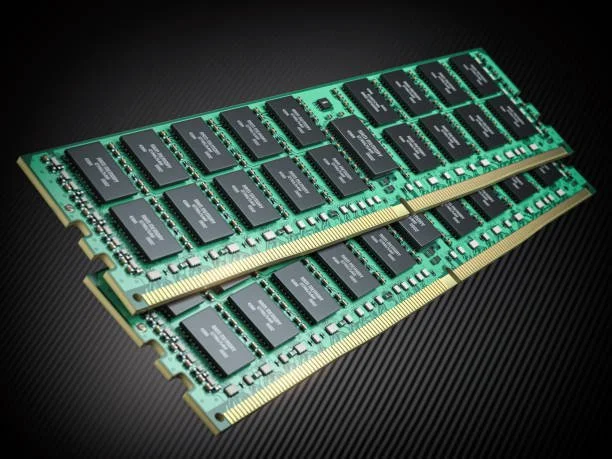
· Integrated Hardware Registers and Buffers: Unlike standard unbuffered DIMMs (UDIMMs), enterprise memory utilizes Registered DIMMs (RDIMMs) or Load-Reduced DIMMs (LRDIMMs) to stabilize electrical signaling on high-trace motherboards.
· Advanced Error Checking and Correction (ECC): Server modules employ dedicated silicon to detect and correct single-bit memory corruptions dynamically, stopping memory faults from crashing running applications.
When sourcing hardware for upgrades or fleet expansions, browsing tested enterprise products ensures you receive memory that passes vendor-specific hardware interrogation upon every boot.
Comparing Lenovo Server Memory Modules vs. Standard RAM
To evaluate the architectural differences clearly, consider how enterprise modules compare directly against consumer-grade and basic commodity unbuffered RAM:
| Feature / Architecture | Lenovo Server Memory Modules | Standard / Commodity RAM |
|---|---|---|
| Error Handling | Advanced Multi-Bit Detection & Single-Bit Correction (ECC) | Non-ECC (No correction capabilities) |
| Signal Buffering | Hardware Register Buffer (RDIMM) or Data Buffers (LRDIMM) | Unbuffered (UDIMM), loading CPU bus directly |
| Firmware Telemetry | Integrated SPD profiling recognized by Lenovo XClarity Controller | Generic JEDEC profile with no enterprise telemetry |
| Thermal Monitoring | Onboard high-precision thermal sensor ICs with dynamic fan tuning | Basic or absent thermal telemetry |
| Component Screening | Multi-temperature stress testing and component burn-in | Batch-level functional testing only |
| Target Workload | 24/7/365 mission-critical enterprise virtualization and compute | Intermittent, single-user desktop and office workloads |
Deep Dive into Hardware Reliability: ECC and Fault Isolation
The most vital difference between standard memory and enterprise-grade hardware lies in error detection and correction architecture.
The Physics of Soft Errors
Electrical noise, electromagnetic interference, and naturally occurring cosmic ray neutrons periodically strike silicon chips, altering stored electrical charges inside volatile DRAM capacitors. This disturbance flips a binary 0 into a 1 (or vice-versa), creating a single-bit soft error.
In a standard workstation or desktop using non-ECC RAM, this flipped bit goes completely undetected. The operating system writes corrupted data straight to the file system, triggers an unexpected application crash, or displays a blue-screen kernel panic.
Enterprise Fault Resilience
Dedicated Lenovo enterprise server memory incorporates an additional memory chip per module rank (such as 72-bit width instead of 64-bit width). This extra silicon stores Hamming code parity bits that allow the CPU memory controller to:
1. Detect and Correct Single-Bit Errors (SEC): Detect and repair the flipped bit transparently in real time without pausing the operating system or application threads.
2. Detect Double-Bit Errors (DED): Identify two simultaneous bit flips across the same data word and alert the hypervisor immediately, executing a controlled shutdown before corrupt data reaches permanent storage.
3. Trigger Memory Scrubbing: Modern Lenovo UEFI controllers periodically read through all active memory addresses during idle execution cycles, repairing single-bit errors before they accumulate into uncorrectable multi-bit events.
Data from the National Center for Biotechnology Information indicates that advanced memory and processor reliability mechanisms reduce data corruption and operational abort rates in computational workloads by up to 90%, proving that hardware-level error isolation is indispensable for high-availability systems.
Signal Integrity: Unbuffered vs. Registered and Load-Reduced
Standard consumer RAM uses unbuffered architecture (UDIMM). In a UDIMM configuration, every single memory chip connects directly to the CPU memory bus trace lines. As you install additional modules, the electrical capacitance on the bus climbs rapidly, causing signal degradation, electrical reflections, and timing drift.
By placing hardware registers between the host memory controller and the DRAM chips, Lenovo data center server memory shields the CPU from capacitive overloading. This isolation permits systems to scale across multiple channels (such as 8 channels on Intel Xeon and 12 channels on AMD EPYC platforms) while sustaining maximum clock frequencies and supporting multi-rank configurations across every motherboard slot.
Thermal Telemetry and Lenovo XClarity Management
Standard memory runs blind inside high-density chassis. A consumer DIMM lacks standardized communication channels with out-of-band management controllers. If a generic module overheats, the server cannot detect the thermal spike until the chip suffers silicon degradation or forces an emergency thermal trip.
Dedicated Lenovo server memory modules incorporate high-precision thermal sensor integrated circuits directly on the module PCB. These sensors communicate over a dedicated I2C or I3C bus with the onboard Lenovo XClarity Controller (XCC).
· Proactive Thermal Management: XCC monitors individual DIMM thermals in real time, modulating server fan speeds dynamically across distinct chassis cooling zones to keep memory within optimal operating envelopes.
· Predictive Failure Alerts: If a module begins exhibiting an abnormal escalation of correctable ECC faults, XCC logs the event and flags the physical slot for maintenance, allowing system administrators to schedule replacements during standard maintenance windows rather than responding to emergency outages.
Maximize Data Center Value with Ram Exchange
Sourcing certified enterprise memory does not require paying exorbitant original distributor premiums. Since 2006, Ram Exchange has delivered Tier-1 compatible DRAM solutions and enterprise IT Asset Disposition (ITAD) services to businesses and data centers worldwide.
· OEM-Grade Verification: Every module in our inventory undergoes extensive diagnostic screening and server-level burn-in to ensure 100% compatibility with Lenovo ThinkSystem hardware.
· Comprehensive One-Year Warranty: We stand behind the quality of our memory with an industry-leading one-year warranty, giving your operations full assurance.
· Massive Inventory: From legacy DDR3 modules for older System x infrastructure to cutting-edge DDR4 and DDR5 enterprise modules, we maintain the inventory you need to eliminate hardware lead times.
· Hardware Lifecycle Management: When expanding your capacity, you can sell to us to monetize decommissioned or surplus memory, capturing maximum return on your initial infrastructure investment.
Invest in Infrastructure Reliability
While standard RAM suffices for client workstations, enterprise workloads demand the fault isolation, thermal telemetry, and electrical buffering provided exclusively by dedicated Lenovo server memory modules. Choosing certified enterprise memory protects your applications against data corruption, eliminates unneeded operational downtime, and ensures that your server hardware operates at its full potential.
Whether you are configuring a new deployment, expanding virtualization density, or replacing faulty hardware, contact the enterprise hardware specialists at Ram Exchange today for personalized technical guidance and reliable component fulfillment.
Frequently Asked Questions
Can I run standard desktop RAM inside a Lenovo server?
No. Lenovo enterprise servers require registered memory (RDIMM or LRDIMM) with Error Correcting Code (ECC) architecture. Standard desktop RAM is unbuffered (UDIMM), lacks ECC support, and will cause the server to halt with a POST memory discovery error during initialization.
What is the advantage of Lenovo TruDDR4 over generic server RAM?
Lenovo TruDDR4 modules include customized SPD programming that unlocks optimized memory timing and power configurations within the Lenovo UEFI firmware. This custom code allows systems to achieve higher operating frequencies without sacrificing signal stability or generating bus faults.
Where can I find verified Lenovo server RAM for sale?
You should source enterprise RAM exclusively through specialized hardware suppliers that perform in-chassis burn-in testing and provide documented replacement warranties. Sourcing through certified vendors ensures you receive genuine, fault-free modules rather than re-labeled generic memory.
Will mixing different memory ranks harm server performance?
While modern memory controllers can technically operate with mixed single-rank and dual-rank modules, doing so disrupts channel interleaving. For optimal memory bandwidth, always populate identical ranks and capacities across all corresponding channels for both CPU sockets.
How do I identify the exact memory modules my Lenovo server needs?
Access the web management interface of your Lenovo XClarity Controller (XCC) and review the Inventory > Memory tab. This screen displays your existing part numbers, rank profiles, operating voltages, and supported frequencies, allowing you to select fully matching modules.