Where to Buy Lenovo Server RAM from a Trusted Memory Supplier
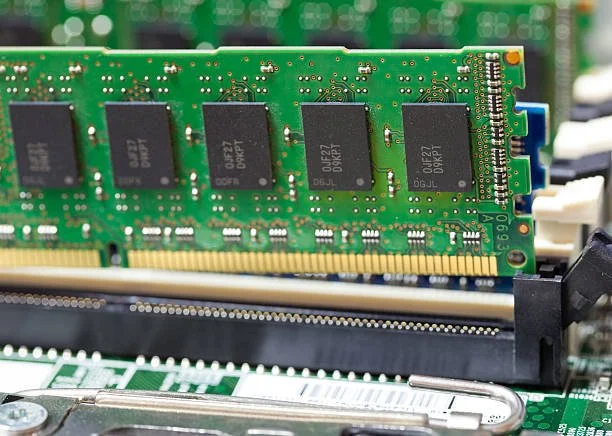
Enterprise data centers face relentless pressure to scale virtualization density, accelerate transaction processing, and support complex computational tasks. When memory bottlenecks emerge, expanding DRAM capacity provides an immediate boost to throughput without forcing full infrastructure overhauls. However, deciding where to buy Lenovo server RAM requires a careful procurement strategy. Sourcing memory for enterprise platforms like Lenovo ThinkSystem is not simply a matter of finding the lowest unit price on an open marketplace; it requires verifying exact architecture alignments, firmware profiles, and supplier credentials.
At Ram Exchange, we specialize in supplying certified DRAM solutions and lifecycle services designed to meet enterprise standards. Deploying unverified or counterfeit memory into modern Lenovo servers risks triggering memory bus throttling, multi-bit uncorrectable errors, and costly downtime.
This guide provides data center managers, IT directors, and procurement specialists with actionable criteria to evaluate a Lenovo server memory supplier, verify hardware authenticity, and secure reliable memory upgrades.
The Real Risks of Sourcing from Open Marketplaces and Unauthorized Brokers
Secondary consumer platforms and unauthorized broker boards are filled with modules pulled from decommissioned consumer machines, re-badged with counterfeit labels, or programmed with cloned firmware. Buying from an unverified vendor introduces three primary operational hazards:
Uncorrectable Memory Errors and System Halts
Enterprise servers rely on Error Checking and Correction (ECC) to catch single-bit parity errors. Substandard silicon or damaged memory cells often degrade under sustained thermal loads, causing correctable errors to escalate into uncorrectable multi-bit faults. An uncorrectable memory fault triggers an immediate hypervisor panic or server reboot.
Memory Channel Down-Clocking
Lenovo ThinkSystem UEFI firmware validates installed memory via Serial Presence Detect (SPD) EEPROM chips. If a module lacks genuine enterprise timing parameters or presents uneven bus capacitance, the system controller automatically clocks down all DIMMs across that channel, severely reducing overall memory bandwidth.
Voided System Diagnostics and Telemetry
Lenovo servers utilize the onboard Lenovo XClarity Controller (XCC) to track module thermals, rank distributions, and correctable error thresholds. Generic or modified modules often fail to report telemetry properly, blinding system administrators to impending hardware failures until an outage occurs.
Authorized Distributor vs. Independent Specialist: Making the Right Choice
Enterprise buyers typically evaluate two primary procurement channels when acquiring server memory: original authorized OEM distributors and certified independent memory specialists. Data published by the Electronics Components Industry Association demonstrates that counterfeit and substandard electronics drain over $250 billion each year from the global economy, emphasizing the need to source exclusively through verified, reputable supply lines.
| Evaluation Metric | Authorized OEM Channel | Certified Memory Specialist (Ram Exchange) | Open Marketplace / Unauthorized Broker |
|---|---|---|---|
| Pricing Structure | Highest markups with inflexible list pricing | Highly competitive tier-1 volume pricing | Unusually cheap (reflects high operational risk) |
| Legacy Availability | Rapid end-of-life (EOL) phaseouts for older generations | Readily available inventory across DDR2, DDR3, DDR4, DDR5 | Inconsistent and unverified stock levels |
| Testing Standards | Standard factory batch testing | Comprehensive in-chassis burn-in and diagnostic screening | Zero testing or basic power-on check only |
| Hardware Warranty | Standard limited vendor warranty | Full one-year replacement warranty | 30-day return window or "as-is" terms |
| Asset Recovery | Rare or heavily discounted trade-in options | Integrated ITAD buyback programs to monetize old memory | No asset recovery or buyback support |
While authorized channels offer genuine parts, their steep price premiums and rapid discontinuation of previous-generation hardware create operational challenges. A specialized Lenovo server memory reseller fills this gap by delivering OEM-grade quality, broad generation support, and significant cost savings.
Five Critical Questions to Vet a Lenovo Server Memory Supplier
Before placing an order or approving a vendor onboarding request, ask these five technical questions to evaluate your supplier:
1. Do You Perform In-Chassis Parametric and Burn-In Testing?
Visual inspection alone cannot reveal microscopic solder bridge fractures, defective capacitors, or intermittent timing faults. A trusted supplier tests enterprise modules under physical workload and thermal stress to ensure that signals remain stable under load.
2. Are Your Modules Fully Programmed for Lenovo ThinkSystem Platforms?
Lenovo TruDDR4 and TruDDR5 memory standards require exact SPD configurations. Ask the supplier if their modules pass Lenovo XClarity Controller hardware validation without generating non-genuine hardware warnings or POST faults.
3. What Does Your Replacement Warranty Cover?
Never purchase enterprise memory without a comprehensive warranty. Trustworthy suppliers stand behind their inventory with at least a full one-year replacement guarantee and rapid RMA processing.
4. Do You Maintain Immediate Stock for High-Density Configurations?
Enterprise upgrade schedules cannot wait weeks for drop-shipped components. A dependable partner maintains deep warehouse stock across standard capacities (32GB, 64GB, 128GB, and 256GB). You can review our extensive inventory of certified products to match your specific model and density requirements.
5. Can You Help Us Monetize Decommissioned Hardware?
A comprehensive hardware partner understands the full technology lifecycle. When replacing lower-density DIMMs with high-capacity modules, you can sell to us to offset capital expenditures and ensure that surplus memory is reused or recycled responsibly.
Technical Checklist Before Purchasing Lenovo Server RAM
To guarantee total compatibility, confirm these hardware specifications directly within your server management interface before you buy:
Processor Model & Generation (Intel Xeon Scalable vs. AMD EPYC)
Memory Technology Standard (DDR4 vs. DDR5)
Module Classification (RDIMM, LRDIMM, or 3DS RDIMM)
Current Operating Voltage (Standard 1.2V DDR4 vs. 1.1V DDR5)
Module Rank Distribution (Single-Rank 1R, Dual-Rank 2R, Quad-Rank 4R)
Number of Active Memory Channels per Socket (8 Channels on Intel, 12 Channels on AMD)
Crucial Deployment Reminder: Never mix RDIMMs and LRDIMMs within the same server chassis. Mixing buffered architectures prevents memory training during POST, halting server initialization until the conflicting modules are removed.
Partner with Ram Exchange for Guaranteed Reliability
Selecting the right partner to buy Lenovo server RAM ensures that your IT infrastructure remains fast, stable, and budget-friendly. Operating since 2006 from Silicon Valley, Ram Exchange brings over 18 years of technical expertise to the enterprise memory and IT Asset Disposition (ITAD) market.
· Rigorous Tier-1 Testing: Every memory module undergoes rigorous diagnostic testing to ensure 100% compliance with Lenovo ThinkSystem, System x, and ThinkServer platforms.
· Extensive Stock Availability: We maintain ready-to-ship inventory spanning DDR2, DDR3, DDR4, and DDR5 standards, providing support for both legacy racks and modern data center deployments.
· Comprehensive One-Year Warranty: Every module we sell includes a full one-year warranty, giving your operations complete reliability.
· Certified ITAD Services: Our certified asset disposition services handle enterprise data destruction, remarketing, and electronics recycling, keeping your organization compliant with environmental standards.
Equip Your Data Center with Proven Memory Hardware
Upgrading system memory remains one of the smartest ways to boost compute performance and extend the lifespan of your enterprise servers. Sourcing your components from a reliable, specialized supplier ensures seamless compatibility, prevents downtime, and maximizes your hardware return on investment.
When your team is ready to buy Lenovo server RAM or needs help identifying part numbers for an upcoming rollout, contact the enterprise specialists at Ram Exchange today to receive a personalized quote and expert hardware guidance.
Frequently Asked Questions
Can I install third-party memory in my Lenovo ThinkSystem server?
Yes, provided the modules match Lenovo's exact technical specifications for frequency, voltage, rank, and latency, and carry compliant JEDEC/SPD programming. Certified third-party modules deliver equivalent performance and reliability to factory-labeled options at a substantially lower price point.
What is the difference between RDIMMs and LRDIMMs when purchasing Lenovo RAM?
RDIMMs buffer only address and command lines, making them an ideal, cost-effective choice for small to mid-range configurations. LRDIMMs buffer both control signals and data lines, reducing electrical bus loading and allowing you to populate all slots per channel without sacrificing speed.
Where can I find genuine Lenovo server RAM for sale?
You should purchase enterprise memory directly from certified memory specialists and established hardware suppliers that operate dedicated testing facilities. Avoid unverified secondary marketplaces where parts are sold without functional burn-in testing or warranty coverage.
Why does my server report an "Unsupported Memory Configuration" error?
This error typically points to an improper slot population sequence, an asymmetrical layout between CPU sockets, or mixed module types (such as pairing RDIMMs with LRDIMMs). Always populate primary slots before secondary slots and mirror configurations across both processors.
How do I safely retire surplus memory modules after completing an upgrade?
Do not send operational enterprise memory to a landfill. Partner with an IT asset disposition provider to remarket viable modules, recover residual hardware value, and recycle unrecoverable materials in compliance with environmental regulations.