Buy Lenovo Server RAM: What Enterprise Buyers Should Know Before Ordering
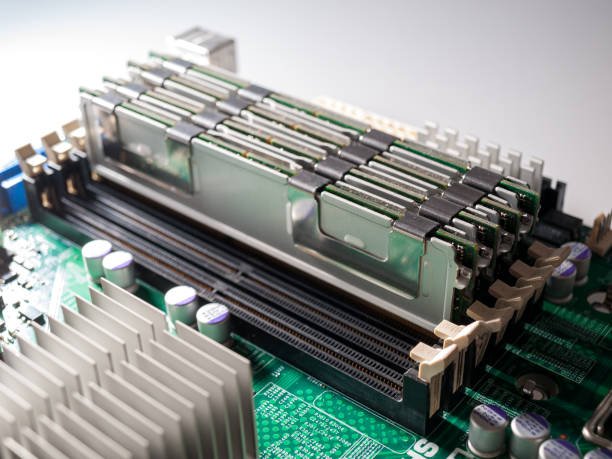
Procuring datacenter hardware requires balancing tight operational budgets against strict performance and uptime requirements. When enterprise buyers and IT procurement teams prepare to buy Lenovo server RAM, making informed hardware decisions prevents costly deployment delays, overspending, and system instability. Adding the right memory modules expands host virtualization density, accelerates in-memory database queries, and maximizes compute throughput across your enterprise fleet.
Server memory procurement involves far more than matching socket generations. IT buyers must evaluate original equipment manufacturer (OEM) markups, verify architectural channel rules, inspect vendor testing standards, and protect supply chains against counterfeit parts. At RAM Exchange, we help enterprise organizations navigate hardware procurement by supplying certified, Tier-1 compliant server memory solutions that reduce acquisition costs without sacrificing reliability.
The Total Cost of Ownership (TCO) Impact of Server Memory Procurement
Memory subsystems represent one of the largest capital expenditures in modern enterprise hardware deployments. As data analytics, containerized microservices, and AI inference workloads expand, memory capacity often dictates total server density.
A comprehensive datacenter infrastructure study published by the National Science Foundation (NSF PAR) reveals that physical DRAM constitutes over 50 percent of total server hardware costs and accounts for 75 percent of the embodied carbon footprint of an enterprise server. Because memory consumes such a massive share of your hardware budget, adopting an optimized procurement strategy yields immediate financial and operational returns.
Procurement teams that optimize their memory sourcing strategy achieve three major business outcomes:
Significant CapEx Reductions: Lowering per-gigabyte acquisition costs across hundreds of server nodes preserves capital for software licensing and network infrastructure.
Extended Hardware Lifecycles: Expanding memory on existing Lenovo ThinkSystem servers delays costly chassis replacements by 24 to 36 months.
Optimized Power and Cooling: Selecting modern low-voltage modules reduces thermal load and lowers ongoing datacenter power consumption.
OEM Branded vs. Certified JEDEC Enterprise RAM: Breaking Down the Price Premium
One of the most critical decisions enterprise buyers face is whether to purchase OEM-branded memory or third-party JEDEC-compliant modules. Understanding the technical reality behind these labels helps organizations avoid inflated hardware markups.
The Truth About OEM Server Memory
Major server manufacturers do not fabricate their own DRAM silicon. Instead, they purchase DRAM chips from Tier-1 semiconductor fabricators (such as Samsung, SK Hynix, and Micron), mount them onto printed circuit boards, and apply proprietary firmware signatures and brand labels.
Understanding Lenovo TruDDR4 and TruDDR5
Lenovo ThinkSystem servers feature TruDDR memory modules containing custom Serial Presence Detect (SPD) code signatures. The server UEFI and Lenovo XClarity management controller read these signatures to authenticate genuine Lenovo RAM. While TruDDR enables certain automated reporting features in XClarity Administrator, standard enterprise-grade JEDEC modules deliver identical clock speeds, CAS latencies, voltages, and thermal reliability.
Cost Differences and Performance Parity
| Evaluation Metric | OEM Branded Memory (TruDDR) | Certified Third-Party Enterprise RAM |
|---|---|---|
| Silicon Source | Tier-1 Fabricators (Samsung, SK Hynix, Micron) | Tier-1 Fabricators (Samsung, SK Hynix, Micron) |
| JEDEC Compliance | Fully Compliant | Fully Compliant |
| XClarity Telemetry | Full Proprietary Telemetry | Standard IPMI / JEDEC Telemetry |
| Pricing Markup | 40% to 150% Brand Premium | Wholesale Enterprise Pricing |
| Warranty Terms | Tied to System Service Contracts | Independent 1-Year to Lifetime Warranties |
Before you buy Lenovo server RAM at high OEM list prices, evaluate your actual operational needs. Standard JEDEC-compliant modules from verified vendors offer the exact same computing performance and mean-time-between-failures (MTBF) at a fraction of the cost.
At RAM Exchange, we eliminate the unnecessary brand premium by supplying rigorously tested, Tier-1 enterprise memory modules built to strict JEDEC standards.
Critical Technical Specifications to Verify Before Ordering
Ordering the wrong memory type halts datacenter deployments and creates return shipping headaches. Enterprise buyers must verify these key technical specifications prior to issuing purchase orders:
1. Module Type: RDIMM vs. LRDIMM vs. 3DS RDIMM
Lenovo ThinkSystem motherboards support specific module architectures, and mixing formats within the same server is strictly prohibited:
Registered DIMMs (RDIMMs): The standard choice for mainstream enterprise workloads. RDIMMs balance low latency, electrical stability, and affordability in densities up to 64GB per module.
Load-Reduced DIMMs (LRDIMMs): Designed for high-capacity DDR3 and DDR4 servers. LRDIMMs buffer data and control lines, allowing servers to run more memory ranks per channel.
3DS Stacked RDIMMs: Utilize vertically stacked DRAM silicon dies to achieve extreme densities (128GB, 256GB, and 512GB per DIMM) for enterprise virtualization and in-memory computing.
2. Generation and Operating Voltage
Ensure your module generation matches your platform architecture:
DDR4 Modules: Operate at a standard 1.2V across frequencies like 2666 MT/s, 2933 MT/s, and 3200 MT/s.
DDR5 Modules: Operate at 1.1V and feature onboard Power Management ICs (PMICs) to deliver speeds from 4800 MT/s to 5600+ MT/s.
3. Memory Channel Architecture and Balanced Multipliers
Modern Intel Xeon Scalable and AMD EPYC processors enforce multi-channel memory layouts:
Intel Xeon Scalable 1st & 2nd Gen: 6 channels per socket (Order in multiples of 6 or 12 DIMMs).
Intel Xeon Scalable 3rd, 4th, & 5th Gen: 8 channels per socket (Order in multiples of 8 or 16 DIMMs).
AMD EPYC 7002 & 7003 Series: 8 channels per socket (Order in multiples of 8 or 16 DIMMs).
AMD EPYC 9004 Series: 12 channels per socket (Order in multiples of 12 or 24 DIMMs).
Purchasing uneven DIMM counts leaves channels unpopulated, cutting memory bandwidth by up to 50 percent and throttling CPU performance.
To explore verified memory modules organized by server generation, view the wide selection of RAM Exchange products.
Supply Chain Integrity: Protecting Infrastructure from Counterfeits and Grey Market Risks
Procuring server hardware through open online marketplaces or unvetted brokers exposes enterprise infrastructure to severe supply chain hazards.
According to a cybersecurity guidance report published by the Cybersecurity and Infrastructure Security Agency (CISA), secondary market sourcing without strict supply chain controls introduces severe risks of acquiring counterfeit, tampered, or improperly refurbished electronic components. The agency notes that compromised hardware components directly impact operational availability, data integrity, and network reliability across enterprise organizations.
Enterprise buyers must demand transparent sourcing protocols. A trusted distributor tests every module, verifies original silicon manufacturer lot numbers, and checks physical contact pins under magnification to guarantee uncompromised quality.
Best Practices for Bulk Purchasing and Volume Rollouts
Procurement managers who buy Lenovo server RAM in volume must structure their orders to ensure smooth rollouts and uniform system performance across multi-node server clusters.
1. Require Uniform Die Revisions and Manufacturing Batches
When purchasing memory for hundreds of server nodes, request matching DRAM die revisions and rank structures. Mixing different chip revisions across a cluster can introduce subtle timing variances that trigger intermittent ECC alerts during peak compute spikes.
2. Enforce ESD-Safe Protective Packaging
Enterprise memory modules are sensitive to Electrostatic Discharge. Verify that your vendor packages bulk orders in professional antistatic trays and sealed conductive moisture-barrier bags. Loose, bulk-bagged components risk invisible static damage that shortens component lifespan.
3. Maintain Buffer Stock for Immediate Field Spares
When ordering bulk server memory for a major cluster deployment, add a 3 to 5 percent spare buffer to your order. Having identical, pre-tested replacement DIMMs on hand eliminates downtime if a server node experiences an isolated hardware failure during routine operations.
How RAM Exchange Delivers Value for Enterprise IT Procurement
Selecting a memory distributor is an investment in your infrastructure supply chain. RAM Exchange provides end-to-end DRAM procurement and IT Asset Disposition (ITAD) solutions built specifically for enterprise IT teams and datacenters.
Rigorous Diagnostic Testing Protocols
Every memory module supplied by RAM Exchange undergoes thorough diagnostic validation. Our hardware technicians test modules under realistic compute stress loads to verify signal stability, timing integrity, and full Tier-1 compliance. We back our hardware with a dependable one-year replacement warranty.
Monetize Decommissioned Server Memory
Infrastructure refreshes often leave organizations with large volumes of working memory modules. Through our specialized ITAD services, we help IT managers turn retired hardware into cash. When your organization upgrades its server memory, sell to us to monetize excess inventory, offset your new hardware expenses, and support certified environmental recycling.
The Pre-Purchase Procurement Checklist for Enterprise Buyers
Review this concise checklist before authorizing purchase orders to buy Lenovo server RAM:
Server Model Confirmation: Record exact server models (such as ThinkSystem SR650 V2 or SR630 V3) and CPU socket counts.
Processor Architecture Check: Identify the specific memory channel layout (6, 8, or 12 channels per CPU).
Module Technology Match: Choose RDIMM, LRDIMM, or 3DS RDIMM based on capacity and density requirements without mixing formats.
Speed and Timing Synchronization: Select identical frequencies (3200 MT/s, 4800 MT/s, etc.) and voltages (1.2V or 1.1V).
Balanced Channel Quantity: Order module quantities that completely populate all channels across all sockets.
Supplier Validation: Confirm the vendor provides comprehensive stress testing, ESD-safe packaging, and a minimum one-year replacement warranty.
Conclusion: Procure Enterprise Memory with Complete Confidence
Strategic hardware procurement requires balancing performance, cost, and supply chain reliability. For enterprise procurement managers and IT directors, the decision to buy Lenovo server RAM demands a clear understanding of memory architectures, channel balancing principles, and vendor testing standards. Choosing certified enterprise memory over high-markup OEM labels allows your organization to expand compute capacity, accelerate database workloads, and maximize infrastructure ROI.
If your team is preparing a server memory rollout, sourcing bulk modules, or seeking verified enterprise DRAM, contact the technical hardware specialists at RAM Exchange today.
Frequently Asked Questions
Will third-party memory void my Lenovo server warranty?
No. Using JEDEC-compliant third-party enterprise memory does not void your Lenovo server hardware warranty. Federal consumer protection statutes in the United States prevent manufacturers from voiding system warranties simply because an organization installed compatible, standard-compliant components from another vendor.
How do I know how many memory modules to order per server?
Check the memory channel architecture of your processor. For an 8-channel processor (such as Intel Ice Lake or AMD EPYC 7003), order memory in sets of 8 modules per CPU socket (16 modules for a dual-socket server). This ensures balanced memory interleaving and unlocks 100 percent of native memory bandwidth.
What is the primary difference between DDR4 and DDR5 server memory?
DDR5 memory provides double the data bandwidth of DDR4, operates at a lower base voltage (1.1V vs 1.2V), and features onboard Power Management ICs (PMICs) directly on the DIMM. DDR4 and DDR5 modules use different physical key notches and pin configurations, meaning motherboards support one generation exclusively.
Can I mix different memory capacities when upgrading a Lenovo server?
While some Lenovo platforms technically boot with mixed capacities across different channels, doing so disables symmetric multi-channel interleaving. This creates severe performance penalties and uneven NUMA node latency. Enterprise best practice requires installing identical module capacities and rank profiles across all channels.