In the realm of enterprise financial planning, the procurement of IT hardware often represents a significant capital expenditure. For CFOs and procurement officers, the challenge lies in balancing high-performance requirements with the necessity of budget optimization. While retail purchases offer convenience for small-scale needs, they often prove inefficient for organizational scaling. Transitioning to a bulk RAM supply model is not just a logistical choice; it is a strategic financial move that addresses the complexities of modern infrastructure management.
At RAM Exchange, we specialize in navigating these procurement hurdles. Since 2006, we have functioned as a trusted DRAM and ITAD partner for businesses across the globe. We help organizations move beyond the limitations of retail and adopt a wholesale approach that maximizes every dollar spent on memory infrastructure. This guide explores the distinct financial and operational advantages of bulk sourcing over retail buying.
The Retail Trap: Why Convenience Costs More
Retail purchases are designed for the individual consumer or small office. When you buy from a retail storefront or a standard e-commerce site, you pay for the “last mile” of the supply chain. This includes expensive packaging, individual shipping costs, and a significant retail markup that covers the store’s overhead.
For an enterprise, these costs compound quickly. Purchasing 100 sticks of RAM through retail channels means paying 100 individual markups. Furthermore, retail stock is often inconsistent. You might receive modules from different production batches, which can lead to subtle timing discrepancies and reduced system stability. A bulk RAM supply model eliminates these inefficiencies by bypassing the retail layer and sourcing directly from the distribution level.
Financial Impact of Wholesale Memory Buying
The primary driver behind wholesale memory buying is the reduction in “unit cost.” In the semiconductor industry, volume is the most powerful lever for price negotiation. When you commit to a bulk order, you gain access to price points that are simply unavailable to the retail public.
Beyond the sticker price, bulk sourcing reduces “hidden” procurement costs:
- Logistics Consolidation: Shipping one pallet is significantly cheaper than shipping fifty individual boxes.
- Administrative Efficiency: Processing one invoice for a bulk order takes less time and labor than managing dozens of small transactions.
- Price Lock-In: Bulk contracts allow you to lock in pricing during market troughs, protecting you from the volatility of the DRAM market.
According to the U.S. Bureau of Labor Statistics, price indices for computer components often fluctuate based on global manufacturing output. By utilizing a bulk model, procurement teams can hedge against these fluctuations, ensuring a predictable and lower Total Cost of Ownership (TCO).
Enterprise Procurement: A Shift in Strategy
Effective enterprise procurement requires a shift from reactive buying to proactive planning. Retail is reactive; you buy what you need when you need it. Bulk supply is proactive; you forecast your infrastructure needs and secure the necessary hardware in advance.
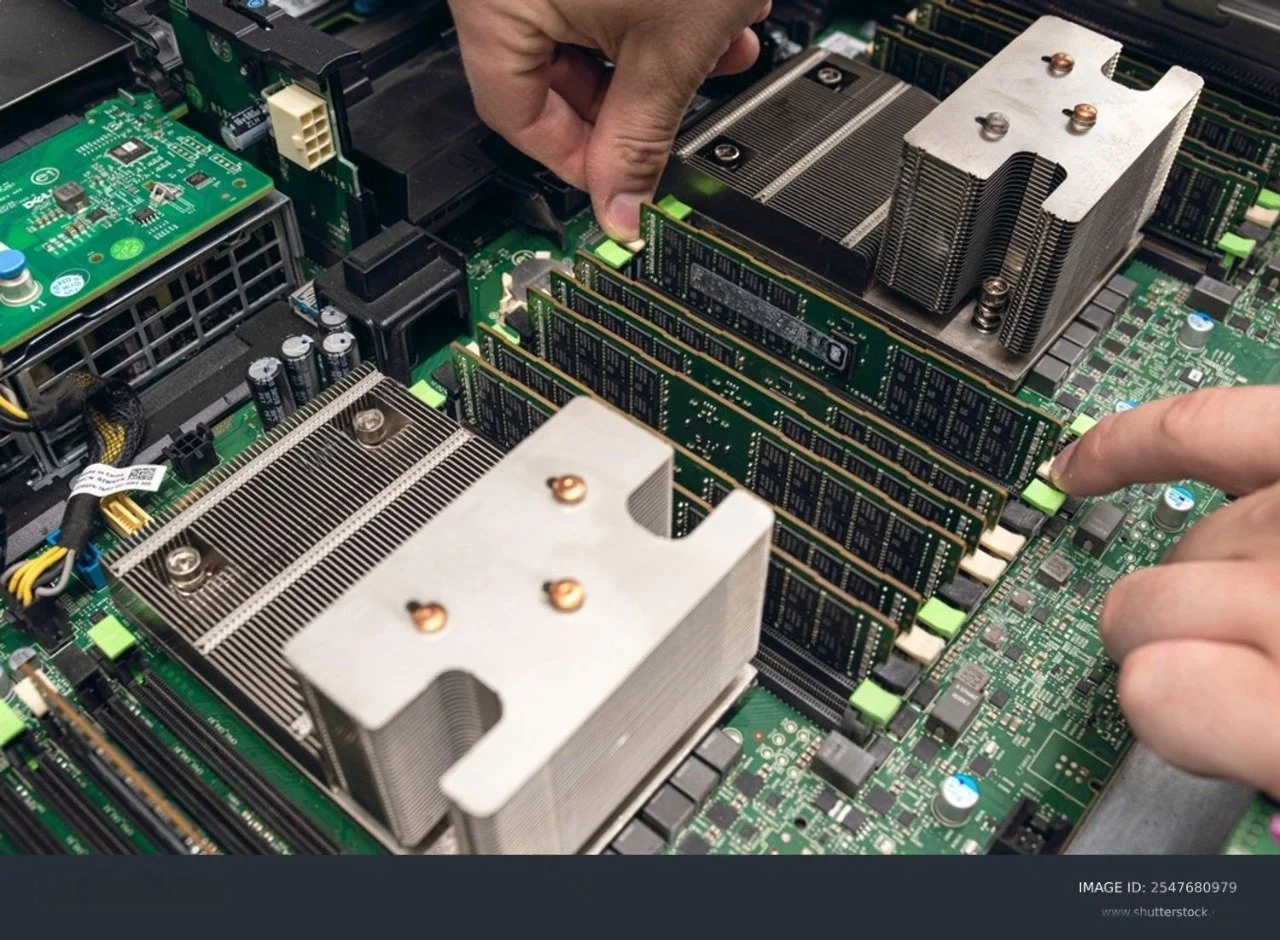
This planning allows for better technical alignment. When you source in bulk, you can request specific batch codes or manufacturer revisions. This ensures that every server in a cluster uses identical hardware, which is critical for maintaining “five nines” of uptime in a data center environment. In retail, you are at the mercy of whatever is on the shelf, which often results in a “checkerboard” of mismatched modules across your server racks.
Why RAM Exchange is the Strategic Choice for CFOs
CFOs require more than just a vendor; they require a partner that understands the intersection of technology and finance. RAM Exchange offers a unique value proposition that aligns with the goal of budget optimization. Based in Silicon Valley, we have a pulse on the global market that allows us to offer superior pricing and availability.
We provide new, used, and refurbished DRAM solutions that meet the rigorous standards of enterprise environments. We recognize that procurement is a tool for growth. By sourcing Tier-1 modules in high volumes, we provide our clients with OEM-quality hardware without the prohibitive markups associated with branded server manufacturers. Our technical expertise ensures that the memory you buy is 100% compatible with your existing architecture, eliminating the risk of costly procurement errors.
The Hidden Costs of Retail Logistics
Logistics is a major factor in the cost comparison between bulk and retail. Retail purchases often involve “free shipping” that is actually baked into the higher unit price. When you scale this to an enterprise level, you are paying for premium shipping on every single module.
In a bulk RAM supply model, logistics are optimized for the enterprise. Modules are shipped in high-density, anti-static trays rather than individual plastic “clamshells.” This reduces physical waste, lowers the shipping weight, and speeds up the installation process for your IT technicians. When your team has to upgrade 500 servers, the time saved by not having to unbox 2,000 individual retail packages results in significant labor savings.
Strategic Benefits of Refurbished Bulk Supply
One of the smartest ways to optimize an IT budget is through the strategic use of refurbished memory in a bulk model. Memory is an incredibly durable component with a very low failure rate after the initial “burn-in” period.
The U.S. Environmental Protection Agency (EPA) notes that extending the life of electronics through reuse is one of the most effective ways to reduce environmental impact. From a financial standpoint, refurbished bulk RAM can cost 40% to 60% less than new retail RAM. For non-critical dev environments, legacy systems, or backup clusters, this represents a massive opportunity for cost savings without a sacrifice in performance.
Maximizing Value Through IT Asset Disposition (ITAD)
A complete bulk RAM supply strategy includes a plan for the hardware it replaces. As you move toward higher-density modules to support modern workloads, your old, lower-density sticks still hold value.
We encourage procurement teams to sell to us when they upgrade. By liquidating your old assets through our ITAD services, you generate immediate capital that can be used to fund your next bulk purchase. This circular procurement model significantly lowers the “net cost” of your hardware refreshes and ensures that your organization remains as lean as possible. You can explore our products to see what you need for the future while simultaneously clearing out the inventory of the past.
Risk Mitigation in Bulk Sourcing
One of the common concerns with wholesale memory buying is the risk of a “bad batch.” If you buy 500 modules and they are faulty, it can paralyze a project. This is why the choice of supplier is paramount.
In the retail world, “testing” is often left to the consumer. In the enterprise bulk world, the supplier must take on that responsibility. At RAM Exchange, we subject our bulk inventory to rigorous stress tests that simulate a 24/7 data center environment. We verify timings, voltage stability, and bit-integrity before the hardware ever reaches your facility. This level of quality control is a form of risk mitigation that retail stores simply cannot match.
Future-Proofing with Bulk Procurement
Scalability is the cornerstone of modern business. A bulk RAM supply allows your organization to scale at the speed of software. If you have a bulk inventory of tested modules on-hand, your IT team can deploy new capacity in hours rather than waiting days for retail shipments to arrive.
This agility is vital for businesses dealing with rapid growth or seasonal spikes in data demand. By maintaining a strategic reserve of memory, you avoid the “emergency buy” scenarios where you are forced to pay retail premiums just to keep your systems online.
Conclusion: The Clear Financial Winner
When comparing the retail and bulk models, the financial winner is clear. Retail is a model built for convenience and small-scale consumption, while bulk RAM supply is a model built for enterprise efficiency and financial discipline. By embracing wholesale memory buying, organizations can reduce their unit costs, streamline their logistics, and improve their system stability.
RAM Exchange remains committed to being the premier resource for hardware that empowers your business. Whether you are outfitting a new data center or looking to optimize the spend of an existing one, we have the expertise to deliver results. We take pride in helping CFOs and buyers turn their hardware procurement into a strategic advantage. If you are ready to see how much your organization can save by switching to a bulk model, we invite you to contact us today. Let us help you build a more efficient, cost-effective infrastructure for the future.
FAQs
1. How many modules constitute a “bulk” order?
While this can vary, a “bulk” order typically starts at 50 to 100 modules. However, the most significant price breaks usually occur at higher thresholds, such as 500 or 1,000 units. We work with organizations of all sizes to find the volume that best fits their specific needs.
2. Can I get a warranty on bulk refurbished RAM?
Yes. At RAM Exchange, we stand behind our hardware. All of our bulk modules, whether new or refurbished, undergo strict testing and come with a comprehensive warranty to ensure your enterprise stays protected and operational.
3. Is there a difference in quality between retail and bulk RAM?
The DRAM chips themselves are often identical. However, the quality control in an enterprise bulk model is usually higher. We perform stress tests designed for server environments, whereas retail modules are typically only tested for consumer-grade stability.
4. How does bulk buying help with “End of Life” (EOL) hardware?
Retailers stop carrying parts as soon as they are no longer in mass production. A bulk RAM supply specialist like RAM Exchange maintains inventory of hard-to-find legacy modules. This allows you to maintain your older systems for years longer than retail availability would allow.
5. How long does a typical bulk shipment take?
Because we maintain a large physical inventory in our Silicon Valley headquarters, we can often ship bulk orders within 24 to 48 hours. This is frequently faster than retail channels that may have to source modules from multiple different locations to fulfill a larger order.