Will RAM Prices Go Down Again? Expert Market Outlook
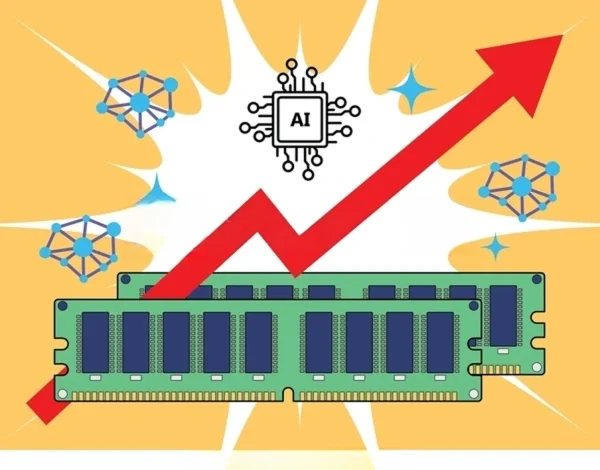
The global memory industry is at a critical turning point. CFOs, procurement teams, and enterprise IT buyers are asking one urgent question: will RAM prices drop in 2026, or is the current cost inflation the new normal?
The answer is complex. While short-term stabilization is emerging in some segments, the broader DRAM market cycle is still being shaped by structural forces, especially artificial intelligence demand, constrained fabrication capacity, and shifting supply allocation toward high-margin enterprise workloads.
For organizations managing large-scale infrastructure budgets, timing RAM procurement has become a strategic financial decision rather than a routine IT purchase.
Ram Exchange, a specialized platform for memory components and market intelligence, helps enterprises track pricing movements and supply availability in a volatile DRAM ecosystem.
Understanding where RAM pricing is heading requires a deep dive into supply dynamics, DRAM market cycles, and 2026 forecasts.
Short Answer: Will RAM Prices Drop Again?
Yes, RAM prices will eventually come down from current peaks, but not quickly and not back to pre AI levels. Across multiple market analyses, three themes repeat:
2026: Prices remain high and volatile
DRAM contract prices are forecast to rise further in 2026, with some sources expecting 50–60 percent quarter over quarter increases in early 2026 for certain DRAM categories.
2027: High plateau with gradual easing
As more capacity comes online, the market is expected to move from sharp hikes to a high but flatter price profile through much of 2027.
2028 and beyond: Down from the peak, but structurally higher
After 2027, DRAM prices are projected to normalize, but analysts do not expect a return to pre 2023 levels; memory is being repriced as core infrastructure for AI.
For CFOs, this means budgets should assume a multi year period of elevated RAM costs, with only modest relief before 2028.
Why Prices Spiked: Three Structural Drivers
1. AI data centers absorbing most DRAM
AI and hyperscale data centers are now the primary driver of memory demand. Recent analyses indicate AI oriented data centers could consume close to 70 percent of global memory chip production by 2026. AI servers need far more DDR5 and HBM per system than traditional servers, which tightens supply for PCs, smartphones, and general enterprise workloads.
2. Supply growth lagging demand
IDC estimates that combined DRAM and NAND supply growth will be around 16–17 percent in 2026, which is below both historical averages and the pace of AI induced demand growth. After years of losses in previous downcycles, manufacturers are deliberately pacing capacity expansion to avoid another glut, focusing investment on higher margin AI and server memory instead of mass oversupply.
3. Vendor pricing discipline
Market commentary suggests major suppliers expect blended DRAM average selling prices to increase around 80 percent or more in 2026, driven by AI demand and tight supply. Counterpoint and other trackers have already reported 40–50 percent memory price increases in late 2025, with further hikes underway in 2026. This reflects conscious pricing discipline rather than a short term anomaly.
RAM Price Forecast: 2026–2028 in Plain Language
2026: Peak or near peak
Memory prices are expected to climb further, with some forecasts pointing to DRAM contract price rises of 58–63 percent quarter over quarter in early 2026 for key segments.
Server DRAM, especially DDR5 RDIMMs, is among the most affected, with per module prices already 2–3 times 2024 levels for some capacities.
2027: High but more stable
Additional capacity ramps and some demand normalization are likely to slow the rate of increase.
Analysts expect DRAM revenue to peak around 2027 as AI server build outs mature and pricing begins to soften.
2028+: Gradual normalization
Memory prices should decline from 2026–2027 highs as supply catches up, but ASPs are still expected to remain well above pre 2023 baselines.neumonda+1
The industry will probably settle into a new normal where RAM is consistently more expensive than in the previous decade but less volatile than today.
Directional DRAM Price Levels vs 2024
| Year | Approximate level vs 2024 | Directional view |
|---|---|---|
| 2025 | 1.4–1.6x | Strong upcycle, sharp Q4 hike. |
| 2026 | 1.8–2.0x+ | Peak pricing, repeated big jumps. |
| 2027 | 1.6–1.9x | High plateau, slower easing. |
| 2028+ | 1.3–1.6x | Lower than peak, above past norms. |
This is a tactical planning tool, not a precise forecast, but it reflects the consensus trajectory.
How This Cycle Differs from Past DRAM Booms
Past DRAM cycles often looked like this: demand spike, capacity binge, oversupply, price crash. This time:
AI is long lived
AI features are being embedded into cloud platforms and business applications, creating sustained demand rather than a one off product boom.
Capacity additions are cautious
After painful prior crashes, vendors are expanding in measured steps and focusing on high margin AI memory (HBM, DDR5) rather than flooding all segments.
Technology mix is shifting
Manufacturers are reallocating older lines toward advanced DRAM and HBM, shrinking effective supply for legacy memory and further limiting how far prices can fall.
The outcome: a longer, higher plateau rather than a quick spike and crash.
What CFOs and Procurement Should Do Now
Instead of waiting for a “return to normal,” finance and sourcing teams should assume RAM will remain costly and plan around it.
1. Embed realistic memory costs into financial models
Update ROI and TCO models for AI and infrastructure projects using price trajectories that reflect 2026–2027 realities, not 2021 prices.
Run scenario analysis with additional 20–40 percent RAM cost increases to stress test key initiatives.
2. Standardize platforms and memory tiers
Move new deployments to DDR5 platforms to avoid paying late cycle premiums for DDR4, which is in end of life and already more expensive per GB in many cases.
Define memory tiers (for example base, performance, and AI/HPC) and avoid overspecifying RAM on low value workloads.
3. Use contracts and timing instead of spot buying
Negotiate framework or volume agreements for core server memory SKUs and try to lock pricing bands for 6–12 months where possible.
Plan and phase purchases around known contract price hikes, buying ahead of major increases when forecasts allow.
4. Mix new and certified used DRAM thoughtfully
For non critical workloads and lower tiers, consider certified refurbished memory from reputable enterprise vendors, which can be 40–70 percent cheaper than new while still meeting reliability needs.
Maintain strict QA, warranty, and vendor vetting standards to manage risk.
5. Treat IT asset disposition (ITAD) as a financial lever
With 64 GB RDIMMs jumping from roughly 255 to 450 dollars and potentially higher, reusable RAM pulled from retired servers is now financially meaningful.
Robust ITAD programs can test, resell, or redeploy memory, generating cash or credits that offset new purchases.
Ram Exchange sits at this intersection of new, used, and ITAD based DRAM strategies and can help build a cohesive memory plan that spans multiple budget cycles.
Strategy Levers vs RAM Price Environment
| Strategy lever | Benefit in a high price market |
|---|---|
| Long horizon forecasting | Aligns purchases with expected spikes and capacity ramps. |
| Platform and SKU standardization | Improves negotiating leverage and simplifies inventory. |
| New + certified used mix | Reduces effective cost per GB in lower risk tiers. |
| ITAD and value recovery | Monetizes retired DRAM to reduce net spend. |
| Vendor partnerships | Provides early insight into supply and pricing trends. |
How Ram Exchange Helps During a Prolonged High Price Cycle
Ram Exchange cannot change the global DRAM cycle, but it can help organizations manage it.
DRAM specialization
Ram Exchange focuses on DRAM across generations, including server grade DDR4 and DDR5, giving buyers options for both legacy and new platforms when many distributors are constrained.
Market aware sourcing
Operating in the DRAM supply chain daily, Ram Exchange sees shifts in availability and pricing as they happen and can help time purchases or suggest alternatives when primary SKUs tighten.
New and QA tested used memory
By offering both new and certified, QA tested used modules, Ram Exchange supports tiered memory strategies that keep mission critical systems on new DRAM while using refurbished options where risk tolerance allows.
ITAD for memory hardware
Through IT asset disposition services, Ram Exchange buys back reusable DRAM from decommissioned assets and recycles the rest responsibly, returning value to IT budgets and supporting sustainability reporting.
To explore how this can fit into your memory roadmap, you can initiate a conversation via the contact page.
Conclusion: Plan for High, Budget for Gradual Easing
So, will RAM prices drop again? Yes, but not quickly, and not back to the old normal. Evidence from IDC, Counterpoint, and other analysts suggests that 2026 will remain a peak period with DRAM prices 80–100 percent higher than a couple of years ago, and that supply growth will lag AI driven demand at least through 2026. From 2027 onward, memory markets should move into a slower, more controlled normalization, with meaningful relief more likely in 2028, but still at structurally higher levels than the pre AI era.
For CFOs and procurement leaders in the United States, the practical takeaway is to stop waiting for a quick reversion and instead build strategies that assume elevated RAM prices for several budget cycles. That means forecasting further out, standardizing on DDR5, using both new and certified used memory where appropriate, and integrating ITAD to recover value from every refresh. Ram Exchange supports this reality by combining DRAM expertise, flexible sourcing, and lifecycle programs that help cushion budgets while you continue investing in compute and AI.
FAQs
1. When are RAM prices most likely to start easing?
Most forecasts point to pricing peaking in 2026, staying high but stabilizing through 2027, and only showing clear downward movement from around 2028 as new capacity ramps.
2. Could DRAM prices crash like in past cycles?
A sharp crash is less likely, because AI demand looks structurally strong and manufacturers are adding capacity more cautiously than in previous boom bust cycles.
3. Should we delay AI or infrastructure projects until RAM is cheaper?
Often no. Delaying strategic projects to wait for price drops can cost more in lost opportunity; it is usually better to adjust configurations and sourcing strategies to manage high prices.
4. How do we budget for RAM in 3–5 year plans?
Use conservative assumptions that RAM will remain 60–100 percent above 2024 levels through 2027, with gradual easing thereafter, and stress test with additional increase scenarios.
5. Does using certified used memory meaningfully reduce risk adjusted cost?
Yes, for non critical workloads and lower tiers, certified, QA tested used DRAM from reputable vendors can cut RAM spend by 40–70 percent while remaining reliable, especially when paired with monitoring and warranties.
6. How can Ram Exchange help manage RAM pricing risk?
Ram Exchange offers multi generation DRAM supply, blends new and certified used memory, and uses ITAD to buy back reusable DRAM, helping organizations smooth costs across this extended high price cycle.