Upgrading workstation fleets, consolidating office PCs, or parting out decommissioned enthusiast rigs regularly leaves IT managers and computer technicians with surplus hardware. While storage drives require specialized data sanitization and CPUs demand socket compatibility, unbuffered desktop memory represents one of the most liquid and durable hardware assets on the secondary market. However, when you prepare to sell used desktop RAM, your final payout depends directly on how the hardware performs during formal intake inspection.
At Ram Exchange, we process, test, and remarket client and enterprise memory assets every day. Professional memory buyers do not rely on guesswork or basic visual assessments. Incoming modules pass through a rigorous battery of multi-point inspections, automated Serial Presence Detect (SPD) interrogations, and live parametric stress testing. Understanding these technical checkpoints helps sellers evaluate their own inventory, avoid common shipping pitfalls, and secure the highest possible buyback offers.
This comprehensive guide breaks down the exact physical, electrical, and firmware condition checks buyers perform on desktop RAM before issuing payment.
Visual and Physical Hardware Inspection
Before a technician places a stick of desktop memory onto a live motherboard or hardware diagnostic fixture, the module undergoes a meticulous microscopic physical inspection. A single cracked component or peeling contact trace can damage test sockets or cause intermittent electrical shorts.
1. Gold Finger Edge Connector Integrity
The gold-plated contact fingers along the bottom of the printed circuit board (PCB) establish the electrical interface with the motherboard DIMM slot. Inspectors check for:
- Gold Contact Peeling or Delamination: Repeated insertion into tight motherboard slots can scrape gold plating away, exposing underlying copper traces to rapid oxidation.
- Tarnishing and Chemical Corrosion: Skin oils, moisture, or improper storage in humid warehouses cause surface corrosion that impedes signal transmission.
- Scratches and Scoring: Deep horizontal scratches from misaligned socket insertions can sever signal continuity completely.
2. Surface-Mount Device (SMD) Component Health
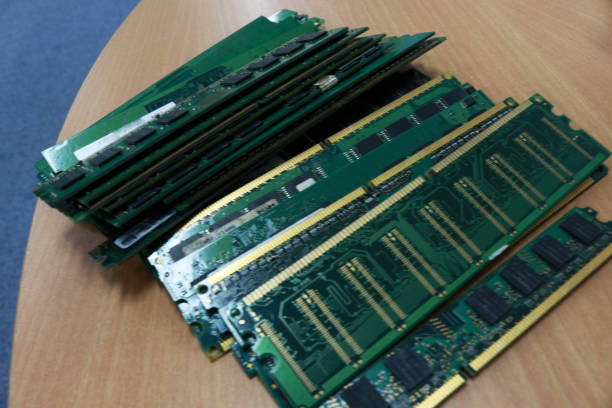
Desktop memory modules rely on miniature surface-mount resistors, decoupling capacitors, and EEPROM chips soldered directly to the fiberglass board.
- Sheared or Missing Capacitors: Loose handling often causes the small capacitors flanking the DRAM chips to shear off. Even if the module appears to boot, missing decoupling capacitors create power fluctuations under sustained workloads.
- Solder Joint Fractures: Thermal cycling and board flexing can crack solder balls beneath chip packaging, creating intermittent connection drops.
3. PCB Substrate Warping and Heat Spreader Condition
Inspectors place modules on precision flat surfaces to verify board straightness. Warped PCBs fail automated pick-and-place equipment and stress motherboard sockets. For modules featuring aluminum heat spreaders, technicians verify that thermal adhesive pads remain intact and that heatsinks are securely fastened without bent cooling fins.
Diagnostic Firmware Verification: Serial Presence Detect (SPD) Interrogation
Once a module passes visual screening, it is mounted on a specialized test bench where diagnostic software reads the onboard Serial Presence Detect (SPD) EEPROM chip.
- Manufacturer Authenticity: The SPD chip stores immutable vendor identification codes. Diagnostic scanners verify whether the internal vendor code matches the external physical sticker (e.g., confirming a genuine Samsung, Micron, SK Hynix, Crucial, or Corsair module).
- Jedec Standard and XMP/EXPO Timings: The scanner checks recorded baseline JEDEC tables, operating voltages (such as 1.2V for DDR4 or 1.1V for DDR5), CAS latencies, and enthusiast profiles like Intel XMP or AMD EXPO.
- Module Density and Rank Profile: Scanners verify internal die configuration, identifying single-rank (1R) versus dual-rank (2R) layouts, bank groups, and memory bus bit widths.
- Corrupt or Modified Firmware Check: If a module has been maliciously flashed with altered SPD profiles or displays checksum parity failures, it is flagged as non-conforming.
If your facility is upgrading or standardizing desktop fleets, exploring our verified inventory of products ensures you receive memory that has already cleared complete SPD and timing validation.
Electrical Parametric and Stress Testing
Passing an SPD read confirms firmware data, but it does not guarantee that the volatile memory cells can hold charge under heavy operational workloads. Reputable buyers subject used memory to multi-pass parametric stress testing using automated benchmarking suites.
Cold-Boot Memory Training
The test bench powers on to evaluate initial memory training. Modern DDR4 and DDR5 memory controllers perform complex signal calibration during Power-On Self-Test (POST). Modules that fail to train at their rated JEDEC frequency indicate degraded silicon dies.
Comprehensive Pattern Stress Testing
Technicians execute standardized diagnostic software (such as MemTest86, PassMark, or proprietary automated test scripts) to run rigorous data pattern algorithms:
- Moving Inversions and Random Pattern Tests: Inverting bit states across billions of microscopic capacitors verifies that individual cells do not flip unexpectedly due to electrical cross-talk.
- Block Move and Row Hammer Tests: Rapidly toggling adjacent memory rows tests electrical isolation between silicon traces. Weak capacitors will bleed charge into neighboring cells, exposing latent memory leaks.
- Thermal Soak Verification: High-performance modules run under sustained load to confirm that stability does not degrade as operating temperatures rise.
Evaluating hardware rigorously is vital for modern electronics reuse. Official reports from the U.S. Environmental Protection Agency highlight that while consumer electronics recycling and recovery rates have reached approximately 38.5% in the United States, millions of tons of durable electronic products continue to enter landfills each year. Rigorous functional testing ensures that working desktop RAM avoids premature disposal and finds productive secondary deployment in refurbished systems.
Condition Grading Criteria for Used Desktop Memory
Following physical, firmware, and stress testing, buyers categorize incoming modules into standard industry condition tiers that determine settlement values:
| Condition Grade | Physical Criteria | Functional Testing Result | Market Valuation Impact |
| Grade A (Pristine / Like New) | Intact original OEM labels, clean gold fingers without scratches, undamaged PCBs and heatsinks. | 100% pass across all multi-pass diagnostic tests at rated factory speed. | Full top-tier market buyback valuation. |
| Grade B (Functional / Minor Wear) | Minor label scuffs, light surface tarnishing on gold fingers, minor heatsink blemishes. | 100% pass across all diagnostic stress runs with zero memory errors. | Standard market buyback valuation (slight cosmetic adjustment). |
| Grade C (Refurbishable) | Missing labels, oxidized contacts requiring chemical cleaning, or loose heat spreaders. | Passes functional testing after manual cleaning and contact reconditioning. | Discounted valuation to cover manual reconditioning labor. |
| Grade D / Fail (Defective) | Missing surface components, cracked silicon, deep trace gouges, or persistent bit errors. | Fails POST memory training or triggers unrecoverable bit errors during stress testing. | Zero functional value; routed to certified e-waste recycling. |
Component reliability remains a critical operational consideration across the IT industry. Technical publications by the USENIX Association on large-scale memory fleet studies show that hard errors caused by physical device degradation account for a significant portion of hardware faults in computing systems, with recurring bit errors frequently originating from localized hardware defects. Establishing clear condition grading allows buyers to separate pristine modules from failing components before re-entering supply chains.
How to Prepare Used Desktop RAM to Pass Buyer Inspections
If you want to ensure your modules achieve Grade A status when you sell used desktop RAM, follow these four pre-shipment steps:
- Conduct a Self-Audit: Run a baseline pass with Windows Memory Diagnostic or MemTest86 on your own machine before pulling the memory. This filters out defective sticks before you pay for shipping.
- Clean Contacts Safely: If edge fingers show dust or light oxidation, gently wipe them with a lint-free foam swab dipped in 99% isopropyl alcohol. Allow contacts to air dry completely. Never use abrasive rubber erasers or metal scrapers, which strip away micro-thin gold plating.
- Leave OEM Stickers Intact: Never remove manufacturer product labels, barcodes, or serial stickers. Peeling off these labels strips critical traceability metadata and immediately downgrades the module to Grade C.
- Use Anti-Static Packaging: Ship memory in dedicated anti-static clamshell blister trays or anti-static shielding bags. Never use plastic zip bags or regular packing foam, as electrostatic discharge (ESD) can destroy delicate silicon cells during shipping without leaving visible physical marks.
Maximize Buyback Value with Ram Exchange
Selling surplus computer hardware should be straightforward, profitable, and secure. Operating from Silicon Valley since 2006, Ram Exchange brings over 18 years of technical expertise to memory procurement and IT Asset Disposition (ITAD).
- Transparent Testing Reports: We provide itemized intake logs detailing serial numbers, diagnostic results, and clear grade allocations for complete visibility.
- Rapid Diagnostic Processing: Our specialized diagnostic facility screens and stress-tests incoming lots quickly, ensuring minimal turnaround time between parcel receipt and settlement.
- Responsible E-Waste Compliance: Non-functional modules submitted during buyback shipments are diverted into certified electronics recycling channels, keeping hazardous materials out of landfills.
- Easy Liquidation Process: When your organization is ready to monetize surplus desktop memory, you can sell to us through a streamlined, documented buyback program designed to maximize hardware recovery value.
Partner with a Trusted Hardware Buyer
Deciding to sell used desktop RAM provides an effective way to offset capital expenditures, clear warehouse storage, and support circular economy practices. By understanding how buyers evaluate hardware, verifying contact health, and packaging modules securely, you can ensure that your hardware passes testing smoothly and earns maximum secondary market value.
Whether you are liquidating a small box of enthusiast memory kits or pallets of decommissioned corporate desktop modules, contact our memory valuation specialists at Ram Exchange today to receive an itemized buyback quote.
Frequently Asked Questions
Can I sell desktop RAM if it has aftermarket heat spreaders installed?
Yes, but modules with original factory-installed heat spreaders yield higher valuations. If you installed third-party heatsinks yourself, ensure they are securely mounted and do not obscure critical manufacturer barcode stickers on the underlying PCB.
What causes a desktop memory module to fail buyer diagnostic testing?
Common reasons for failure include electrostatic discharge (ESD) damage, cracked surface-mount capacitors, peeling gold contacts from repeated improper insertions, or degraded silicon dies that fail to hold electrical charge during high-frequency stress loops.
Does cosmetic wear on the module label affect its buyback value?
Minor scuffs do not impact valuation if the part number, capacity, and serial number remain legible. However, completely missing, torn, or unreadable labels make it difficult to verify original factory provenance, which can downgrade the module to a lower pricing tier.
Can I mix different brands and speeds in the same buyback shipment?
Yes. Professional buyers accept mixed shipments containing various brands, capacities, and speeds (such as mixing DDR4-2666 with DDR5-5600). However, sorting and grouping modules by part number prior to shipping speeds up intake testing and facilitates faster payment release.
What happens to modules that fail physical or electrical inspection?
When modules fail testing, buyers provide an itemized failure report detailing the exact defect. You can choose to have the defective modules shipped back to you or request that the buyer dispose of them through certified, environmentally responsible e-waste recycling channels at no additional cost.