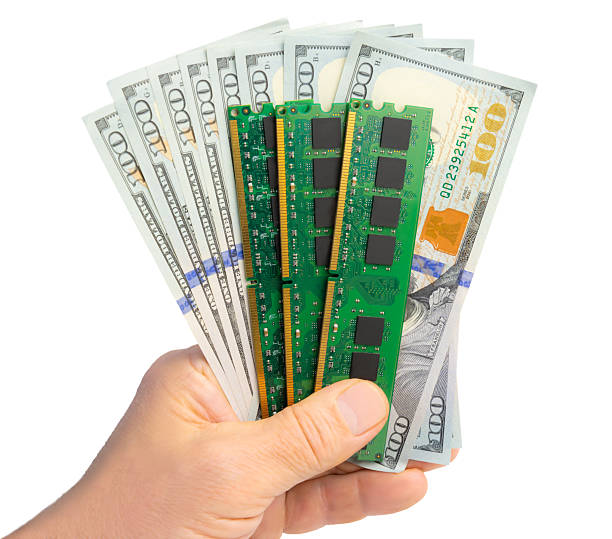
Hardware upgrade cycles move fast. Whether an enterprise data center consolidates virtualization clusters, an IT department replaces aging desktop fleets, or an individual enthusiast upgrades a custom rig, system memory is consistently replaced long before its operational life ends. Leaving decommissioned DRAM modules in anti-static bins or storage closets leads to rapid balance-sheet depreciation. Choosing to sell RAM for cash transforms idle inventory into immediate liquidity, lowers the total cost of ownership for ongoing IT operations, and keeps functional hardware within a circular economy.
At Ram Exchange, we help corporate clients, system integrators, and independent technicians recover fair market value from surplus and decommissioned memory assets. However, many sellers find that preliminary buyback estimates vary substantially from one lot to another. The secondary memory market operates on strict supply-and-demand mechanics, microscopic component grading, and shifting technology cycles.
This comprehensive guide analyzes the primary technical and commercial factors that govern memory valuation, explains how professional buyers evaluate lots, and outlines how you can prepare your hardware to secure top-tier buyback payouts.
The Economics of Memory Depreciation and Market Timing
DRAM components do not maintain static pricing over time. Memory pricing experiences cyclical volatility driven by wafer fabrication outputs, global consumer demand, and hyperscale data center adoption rates.
Understanding where your modules sit on the technology adoption curve determines whether you should liquidate immediately or wait:
- Peak Premium Phase: Contemporary standards (such as modern DDR5 server modules and high-speed client memory) command high secondary values because OEM supply chains often face backorders, leading secondary integrators to pay premiums for quick delivery.
- Stable Volume Phase: Mainstream platforms (such as DDR4 RDIMMs and SO-DIMMs) maintain steady liquidity. While unit pricing sits below initial retail, secondary demand remains massive across enterprise maintenance providers.
- Scrap / Sunset Phase: Once a generation falls two or three cycles behind modern processor architectures (such as DDR2 or early DDR3), resale demand contracts sharply, eventually shifting the valuation from functional component resale to scrap metal recovery.
Holding surplus inventory indefinitely is costly. Official research from the United Nations Institute for Training and Research within the Global E-waste Monitor reveals that raw materials inside global e-waste reached an unrecovered valuation of 91 billion dollars annually, with only 22.3% of generated hardware officially collected and recycled. Liquidating viable memory directly through a specialized buyback program captures this lost capital before components lose all functional utility.
Primary Factors That Determine Memory Buyback Value
When a hardware specialist evaluates an incoming batch of memory, five technical variables dictate the final purchase offer.
1. Generation and Underlying Architecture
The memory standard represents the baseline price ceiling. A 32GB DDR5 module commands significantly more capital than a 32GB DDR4 module due to modern silicon design, integrated power management ICs (PMICs), and current motherboard compatibility.
2. Module Capacity and Density
Higher per-DIMM densities yield higher valuations per gigabyte. For example, a single 64GB DDR4 server module commands a much higher buyback price than four 16GB DDR4 modules, even though both options provide an identical 64GB of total capacity. Modern enterprise server boards feature limited physical DIMM slots, making high-capacity sticks far more desirable for administrators looking to maximize density per channel.
3. Module Classification: Enterprise vs. Consumer
The secondary market heavily favors enterprise-grade hardware over consumer memory:
- Enterprise Memory (RDIMM, LRDIMM, 3DS): Certified server memory features Error Checking and Correction (ECC) logic and integrated register/data buffers. Enterprise RAM buyers continually seek these modules to support corporate compute nodes and cloud maintenance contracts.
- Consumer Memory (UDIMM, Non-ECC SO-DIMM): Standard desktop and laptop memory appeals to client repair shops and system refurbishers, but unit margins and resale values are generally lower due to higher retail availability.
4. Brand and Silicon Fabrication Tier
Professional buyers distinguish between Tier-1 major DRAM manufacturers and generic third-party re-assemblers. Modules built directly by Tier-1 silicon fabricators (Samsung, Micron, and SK Hynix) or OEM-labeled sticks (HPE SmartMemory, Dell Certified, Lenovo TruDDR, Cisco UCS) yield higher buyback offers because their reliability profiles are documented and recognized by enterprise diagnostic controllers.
5. Physical Condition and Batch Uniformity
A batch of 500 identical, matched-part-number modules packaged in proper anti-static trays delivers much higher value than a mixed bin of random brands and capacities. Uniform lots eliminate processing overhead, simplify diagnostic testing, and allow secondary distributors to fulfill volume contracts immediately.
Valuation Matrix: How Different Memory Types Compare
To illustrate how technical characteristics impact market value, review the comparative breakdown below:
| Memory Category | Typical Target Market | Resale Liquidity | Relative Buyback Value | Primary Valuation Driver |
| DDR5 Enterprise (RDIMM/3DS) | Cloud hyperscalers, modern enterprise servers | Very High | Premium | High per-DIMM density (64GB to 256GB) and current generation demand |
| DDR4 Enterprise (RDIMM/LRDIMM) | Data center maintenance, corporate virtualization | High | Strong / Moderate | Volume requirements for Gen9/Gen10 server fleets |
| DDR5 Client (SO-DIMM/UDIMM) | Laptop repair centers, system builders | Moderate | Moderate | Mainstream commercial notebook refresh cycles |
| DDR4 Client (SO-DIMM/UDIMM) | Workstation upgrades, educational fleets | Moderate | Budget / Stable | Widespread availability across secondary markets |
| Legacy DDR3 / DDR2 | Legacy hardware maintenance, industrial systems | Low | Minimal / Scrap Tier | Niche industrial demand or raw precious metal reclamation |
Environmental and Compliance Benefits of Memory Buyback
Monetizing surplus hardware delivers environmental dividends alongside financial returns. Electronic waste remains the fastest-growing solid waste stream in modern municipal management.
Environmental publications from the U.S. Environmental Protection Agency emphasize that bilateral international electronics stewardship and domestic certified reuse frameworks prevent hazardous materials like lead and heavy flame retardants from entering municipal landfills. Recovering operational DRAM through certified secondary markets directly reduces the need for primary silicon mining, smelting, and wafer fabrication, which consume thousands of gallons of water and kilowatt-hours of electrical energy per individual chip.
Partnering with an IT Asset Disposition (ITAD) specialist ensures that every retired stick of RAM either finds a productive second life in a live server or undergoes certified material reclamation in compliance with environmental regulations.
How to Prepare Your Memory to Maximize Your Payout
If you want to secure the highest possible return when you sell RAM for cash, take these proactive steps before requesting a quote:
- Audit Part Numbers and Quantities: Create an inventory spreadsheet documenting the exact manufacturer part numbers (e.g., M393A4K40CB2-CTD), module capacities, speeds, and total quantities. Clear inventory lists allow buyers to quote accurate market pricing immediately.
- Handle with Anti-Static Precautions: Always handle memory by its edges. Never touch the gold contact fingers directly, as skin oils cause oxidation over time, and static electricity can destroy internal DRAM cells without visible external damage.
- Use Proper Packaging Materials: Ship memory modules securely seated inside anti-static plastic trays (blister packs) or wrapped individually in anti-static bubble wrap. Tossing loose modules into a cardboard box where they rub together during transit will snap surface-mount capacitors and damage contact pins, destroying their resale value.
- Clean Dirty Contacts Safely: If older modules exhibit light surface tarnishing on their gold fingers, gently clean them using a lint-free swab moistened with 99% isopropyl alcohol before shipping.
Turn Surplus Memory into Working Capital with Ram Exchange
Recovering maximum value from excess hardware requires working with an experienced, transparent partner. Since 2006, Ram Exchange has delivered trusted memory sourcing and IT Asset Disposition (ITAD) services from Silicon Valley to corporate data centers, enterprises, and individual technicians worldwide.
- Transparent Buyback Offers: We provide clear, competitive valuation based on real-time market data across legacy DDR2/DDR3, mainstream DDR4, and current DDR5 modules.
- Rapid Diagnostic Processing: Our specialized diagnostic laboratory verifies and screens lots quickly, ensuring minimal turnaround time between shipment receipt and payment release.
- Responsible E-Waste Management: Any non-functional hardware submitted during a buyback lot is diverted into certified electronics recycling channels, keeping harmful components out of landfills.
- Streamlined Disposition Workflow: When your organization is ready to liquidate excess DRAM, you can sell to us through an easy, transparent buyback process designed to maximize your return on investment.
Partner with Proven Memory Liquidation Specialists
Holding onto retired memory inventory only allows hardware value to evaporate through continuous market depreciation. By understanding the primary factors driving memory valuation, properly auditing your parts, and following safe handling protocols, you can maximize your recovery capital and fund future technology initiatives.
Whether you are liquidating a handful of high-density server modules or clearing out pallets of decommissioned corporate inventory, contact our memory valuation specialists at Ram Exchange today to receive an itemized buyback quote.
Frequently Asked Questions
Can I sell RAM modules that were pulled from working servers?
Yes. Enterprise server memory pulled during cluster upgrades or cloud hardware decommissions represents one of the most sought-after categories in the buyback market. High-capacity RDIMMs and LRDIMMs from Cisco, HPE, Dell, and Lenovo typically yield strong returns.
What happens if some modules in my buyback shipment fail testing?
Reputable buyers will provide an itemized diagnostic report showing which modules passed and which failed. You are typically paid for all passing units, while defective modules can either be safely returned to you or channeled into certified e-waste recycling at your request.
Is it worth selling older DDR3 memory?
While DDR3 holds significantly less value than modern DDR4 or DDR5 hardware, high-capacity enterprise DDR3 modules (such as 16GB or 32GB server DIMMs) still hold utility for legacy infrastructure maintenance. Lower-capacity client sticks may only carry nominal scrap value, but recycling them responsibly remains a best practice.
How quickly do I receive payment after shipping my memory?
Once the shipment arrives at the testing facility, processing typically takes between two to five business days depending on lot volume. After visual inspection, serial logging, and diagnostic stress testing are complete, payment is disbursed via wire transfer, ACH, check, or digital payment.
How should I package my memory modules to prevent damage during transit?
Pack memory modules in fitted anti-static trays (JEDEC clamshells) or ESD-shielding bags. Cushion the trays inside a sturdy corrugated shipping box with adequate bubble wrap to prevent internal movement. Never ship loose memory in padded envelopes, as postal sorting rollers can easily crack silicon dies.