
Corporate computing environments move through continuous hardware evolution. Whether your organization is modernizing data center server racks, transitioning hybrid employee fleets from DDR4 to DDR5 platforms, or decommissioning legacy compute nodes, hardware refreshes generate vast volumes of surplus components. While storage arrays introduce stringent data sanitization liabilities and CPUs depend heavily on specific motherboard sockets, system memory remains one of the most durable, liquid, and valuable assets on the secondary market. However, choosing to sell computer RAM at an enterprise scale requires partnering with a vendor capable of delivering transparent valuation, verified chain of custody, and certified environmental compliance.
At Ram Exchange, we work closely with procurement officers, corporate IT leaders, and infrastructure managers to turn surplus memory into working capital. The secondary hardware market features a wide spectrum of buyers, ranging from informal digital brokers to certified enterprise IT Asset Disposition (ITAD) specialists. Sourcing the wrong buyer can result in undervalued assets, lost inventory, delayed payouts, or compliance violations.
This comprehensive guide delivers a framework to help businesses evaluate buyback providers, establish chain-of-custody protocols, and maximize capital recovery when liquidating computer memory.
The Business Case for Proactive Memory Disposition
Leaving decommissioned DRAM modules in anti-static bins or data center storage cages creates silent financial losses. Technology assets depreciate rapidly once disconnected from live production environments.
According to an enterprise asset management review by Human-I-T, hardware assets typically lose 3% to 5% of their remaining market value every month they sit in storage, meaning an unmanaged disposition delay of just two quarters can destroy up to 30% of your recoverable budget.
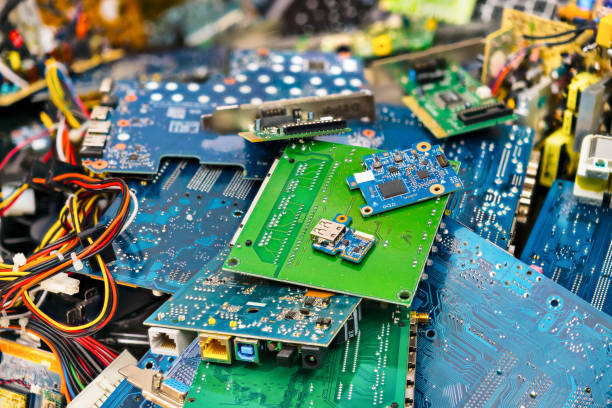
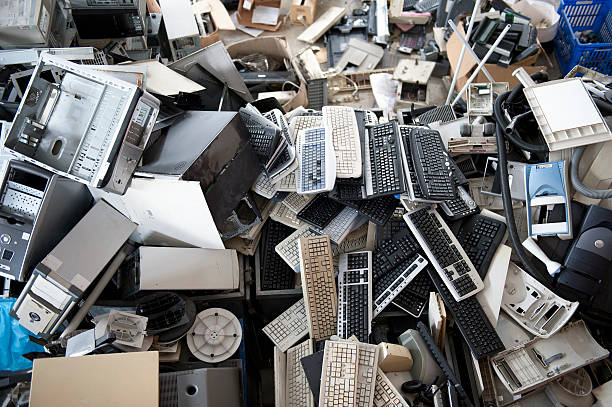
At the same time, liquidating hardware through verified channels supports corporate Environmental, Social, and Governance (ESG) mandates. Data published by the United Nations Institute for Training and Research in the Global E-waste Monitor reveals that raw materials inside global e-waste reached an unrecovered valuation of 91 billion dollars in a single year, with only 22.3% of generated hardware officially documented as formally collected and recycled. Establishing a formal relationship with an enterprise buyback partner ensures that working components remain in productive circulation while non-functional units undergo documented, environmentally sound material reclamation.
Core Criteria for Vetting a Business Memory Buyback Partner
When screening a prospective RAM buyback company, corporate procurement teams should evaluate potential partners across five essential operational dimensions.
1. Transparent Diagnostic and Parametric Testing Capabilities
A reputable partner must operate a dedicated testing laboratory equipped to perform component-level diagnostic screening. Avoid brokers who rely solely on visual inspection. Your partner should provide:
- Automated Serial Presence Detect (SPD) interrogation to verify factory JEDEC timings, voltages, and part authenticity.
- Full-load parametric stress testing across multi-pass diagnostic suites such as MemTest86 or dedicated server-board testing fixtures.
- Itemized diagnostic yield reports outlining exact serial numbers, capacities, test results, and condition grades.
2. Documented Chain of Custody and Secure Logistics
For large corporate consignments, hardware security is paramount. Your partner must provide structured logistics management, including insured freight, tamper-evident seals, serialized tracking numbers, and prompt intake confirmation upon dock arrival.
3. Broad Architecture Support Across Generations
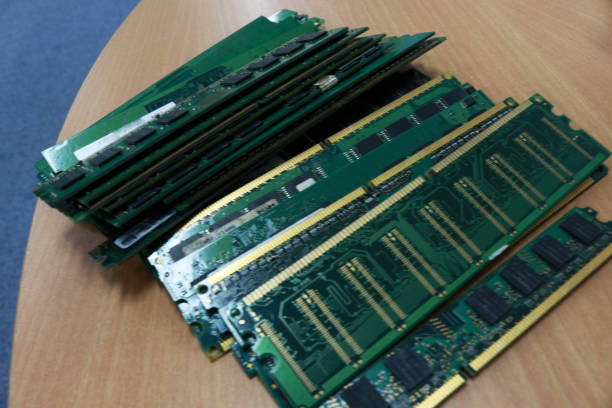
Enterprise inventories rarely consist of a single uniform part number. A capable buyback specialist should handle diverse inventories spanning server RDIMMs, LRDIMMs, workstation ECC memory, and client desktop or laptop SO-DIMMs across DDR3, DDR4, and DDR5 standards.
4. Certified ITAD and E-Waste Compliance
Not every module submitted in a bulk lot will pass electrical stress testing. Your buyback provider must hold established downstream recycling partnerships that adhere to strict e-waste regulations, ensuring that defective components never end up in municipal landfills or overseas dumping grounds.
5. Rapid Financial Settlement and Flexible Payment Terms
Prolonged payout cycles complicate corporate accounting. A trusted provider establishes clear timelines for intake, testing, report sign-off, and capital disbursement via ACH, corporate check, or wire transfer.
Evaluating Buyback Partners: Specialist vs. General Broker vs. Scrap Recycler
Understanding the differences between types of secondary market buyers helps businesses select the partner best aligned with their recovery goals:
| Evaluation Factor | Certified Memory Specialist (Ram Exchange) | General IT Broker / Liquidator | Metal Scrap Recycler |
| Primary Valuation Basis | Functional component market value and silicon density | Broad lot bidding with high safety margins | Raw weight of precious metals (gold, copper) |
| Component Testing | 100% in-chassis parametric and burn-in testing | Basic spot-checking or visual audit only | Zero functional testing (immediate shredding) |
| Generation Coverage | Full range: legacy DDR2/DDR3 through DDR4 and DDR5 | Focuses strictly on fast-moving mainstream parts | Agnostic to generation; valued purely by weight |
| Capital Recovery Potential | Maximum (reflects true component utility) | Moderate (broker takes wide intermediary margin) | Lowest (pennies on the dollar compared to reuse) |
| Settlement Documentation | Serialized grading and diagnostic reports | Basic lot receipt or summary invoice | Weight certificates only |
If your enterprise is concurrently procuring hardware to balance live server nodes while decommissioning older racks, our catalog of verified products offers fully tested enterprise and client memory solutions.
Step-by-Step Enterprise Memory Buyback Workflow
A structured liquidation project follows five clear stages to ensure accountability, making the transaction transparent for both finance and IT management teams:
- Internal Manifest Creation: Catalog manufacturer part numbers, capacities, speeds, and form factors into a structured inventory sheet.
- Valuation Modeling and Formal Offer: Receive itemized pricing based on real-time secondary market demand and confirm the purchase terms.
- Secure Electrostatic Discharge (ESD) Packaging and Freight: Pack modules in fitted anti-static JEDEC clamshells or shielding bags, and ship via tracked, insured freight.
- Laboratory Intake, SPD Verification, and Stress Testing: Modules undergo in-chassis screening to determine functional pass rates and physical condition grades.
- Reconciliation Report and Capital Settlement: Review the itemized audit ledger and receive prompt capital disbursement through your chosen payment method.
Packaging and Logistics Best Practices for High-Volume Shipments
Physical damage during transit is the most common reason enterprise memory lots experience downgraded valuations. Implementing strict handling protocols protects your investment:
- Eliminate Static Hazards: Always handle memory by its fiberglass edges inside an ESD-safe workspace. Never pack loose memory sticks in regular plastic bags or bubble wrap, as static electricity can destroy internal DRAM cells without leaving visible marks.
- Use Dedicated JEDEC Trays: Place memory modules inside fitted anti-static blister trays (JEDEC clamshells). These trays isolate individual modules, preventing gold contacts and delicate surface-mount capacitors from colliding during shipping.
- Secure the Outer Container: Stack anti-static trays snugly inside a heavy-duty, double-walled corrugated cardboard box. Fill all void spaces with anti-static foam or paper cushioning to eliminate internal movement, and seal all box seams with reinforced shipping tape.
Maximize IT Asset Value with Ram Exchange
Choosing the right partner to sell computer RAM ensures that your organization captures maximum financial recovery while maintaining complete compliance. Operating from the heart of Silicon Valley since 2006, Ram Exchange brings over 18 years of specialized industry experience to memory supply and IT Asset Disposition (ITAD).
- Direct Market Valuation: We eliminate unnecessary broker markups by leveraging our extensive distribution network, delivering top-tier buyback pricing based on real-time secondary market intelligence.
- Advanced Testing Facilities: Our specialized testing laboratory screens, verifies, and grades high-volume consignments quickly, minimizing the time between hardware delivery and settlement.
- Complete Hardware Lifecycle Support: Whether you need certified replacement modules or want to liquidate decommissioned infrastructure, we deliver end-to-end hardware solutions.
- Effortless Buyback Experience: When your organization is ready to monetize surplus desktop or server DRAM, you can sell to us through a transparent, documented process designed to optimize your hardware return on investment.
Secure Your Enterprise Memory Liquidation
Deciding to sell computer RAM provides corporate IT departments with a proven method to offset refresh expenses, streamline asset management, and support sustainable circular economy practices. By auditing inventory accurately, insisting on rigorous diagnostic reporting, and partnering with an established memory specialist, your enterprise can execute surplus hardware dispositions with total confidence.
If your team is planning an upcoming infrastructure refresh or currently holds surplus memory inventory, contact our enterprise valuation specialists at Ram Exchange today to receive an itemized buyback quote.
Frequently Asked Questions
What types of memory yield the highest enterprise buyback returns?
High-capacity enterprise server memory modules yield the strongest returns on the secondary market. Specifically, 64GB, 128GB, and 256GB DDR4 and DDR5 registered DIMMs (RDIMMs and LRDIMMs) from Tier-1 manufacturers like Samsung, Micron, and SK Hynix command premium valuations due to ongoing data center expansion and maintenance demand.
Can our organization sell a mixed consignment of server and desktop memory?
Yes. Professional memory buyback partners accept mixed shipments that include server RDIMMs, workstation ECC modules, desktop UDIMMs, and laptop SO-DIMMs. However, grouping and labeling modules by form factor and part number prior to shipment helps accelerate intake testing and final settlement.
How does our company prove that hardware was handled responsibly for ESG audits?
A certified buyback partner provides itemized settlement ledgers documenting the disposition of every module. Passing units are assigned to remarketing channels for secondary reuse, while non-functional units receive serialized certificates of recycling confirming environmentally sound processing in accordance with e-waste standards.
How are payments structured for corporate buyback agreements?
Once your shipment completes intake verification and diagnostic stress testing, the buyer provides an itemized audit report detailing passing yields. Upon your approval of the report, payment is released promptly via electronic funds transfer (ACH), wire transfer, or corporate check according to your vendor payment terms.
What happens if some modules in our shipment fail testing?
Reputable buyers provide transparent test logs detailing why specific modules failed, such as uncorrectable ECC errors, missing capacitors, or SPD read failures. You are paid in full for all passing units, while failed modules can either be returned to your facility or routed to certified electronics recycling channels at your discretion.