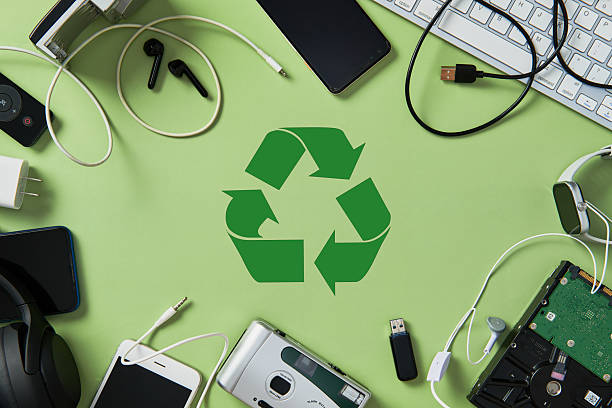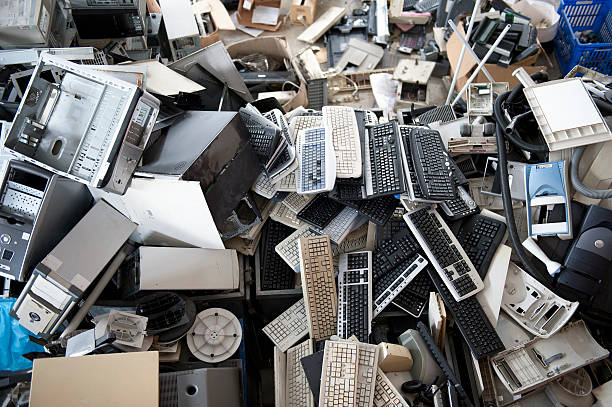
Corporate sustainability has evolved from a voluntary branding initiative into a core metric of institutional governance and operational performance. Modern stakeholders, institutional investors, and regulatory bodies closely evaluate organizations through the lens of Environmental, Social, and Governance (ESG) performance. While renewable energy procurement and carbon-offset programs dominate headline sustainability reports, the physical lifecycle of enterprise technology hardware represents an equally urgent priority. Rapid technology refreshes across cloud data centers, corporate branch offices, and remote employee fleets produce mountains of decommissioned IT assets. Selecting certified e-waste recycling services is the most effective mechanism for corporate leaders to eliminate hazardous disposal risks, substantiate sustainability disclosures, and transition toward a closed-loop circular economy.
At Ram Exchange, we collaborate directly with corporate sustainability teams, procurement directors, and chief technology officers to turn hardware retirement into verifiable ESG progress. Enterprise electronic waste demands specialized processing that balances data sanitization, raw material reclamation, and component-level remarketing. A lack of structured disposition exposes enterprises to heavy regulatory fines, Scope 3 supply chain scrutiny, and reputational risk.
This comprehensive guide breaks down how specialized electronics recycling programs integrate into corporate ESG frameworks, support decarbonization goals, and deliver measurable environmental stewardship.
Aligning Hardware Retirement with ESG Frameworks
Enterprise electronic equipment impacts all three pillars of an organization’s sustainability portfolio. When managing the retirement of server racks, desktop fleets, or network switches, sustainability officers must align disposition protocols with international reporting standards such as the Global Reporting Initiative (GRI), the Sustainability Accounting Standards Board (SASB), and the Task Force on Climate-related Financial Disclosures (TCFD).
- Environmental Pillar (E): Proper electronics recycling diverts hazardous substances (such as lead, mercury, and flame retardants) away from municipal landfills, cuts greenhouse gas emissions through avoided primary mineral extraction, and minimizes resource consumption.
- Social Pillar (S): Certified recycling prevents unverified transboundary shipments of scrap electronics to vulnerable regions with substandard labor conditions. It ensures fair labor practices across domestic disassembly centers and supports digital inclusion through refurbished hardware donations.
- Governance Pillar (G): Systematic asset disposition provides complete auditability through serialized chains of custody, verified data destruction compliance (NIST SP 800-88 Rev. 1), and adherence to local, national, and international e-waste mandates.
Structuring an enterprise-wide hardware disposition policy creates the verifiable data ledgers required to defend corporate sustainability reporting during formal compliance audits.
The Global E-Waste Crisis and Corporate Responsibility
The urgency surrounding sustainable hardware management stems from the rapid acceleration of technology turnover. Data centers expand compute footprints continuously to satisfy artificial intelligence pipelines and virtualization demands, shortening server lifespans to three to five years.
Authoritative research from the United Nations Institute for Training and Research in the Global E-waste Monitor reveals that global electronic waste reached a record 62 million metric tons in a single year, up 82 percent from 2010, and is projected to reach 82 million metric tons by 2030. More critically, only 22.3 percent of this electronic waste was documented as formally collected and recycled in an environmentally sound manner. The report notes that formal recycling activities avoided 900 million metric tons of primary mineral ore extraction and prevented 93 million metric tons of CO2-equivalent emissions globally.
Without documented, certified recycling pipelines, high-density server silicon, client laptops, and printed circuit boards risk being routed into unmonitored waste streams, forfeiting recoverable resources and increasing environmental damage.
When your engineering team needs to balance active server nodes or upgrade hardware while decommissioning older racks, sourcing tested enterprise products directly extends the functional lifespan of existing server chassis and reduces the demand for virgin silicon fabrication.
Scope 3 Emission Reductions and the Circular Economy
Corporate decarbonization strategies frequently struggle with Scope 3 emissions, which represent indirect emissions generated across the upstream and downstream supply chain. The extraction, refining, and manufacturing of computing hardware contribute heavily to an organization’s embedded carbon footprint.
| Lifecycle Stage | Traditional Linear Economy (Take, Make, Dispose) | Circular ITAD Model (Reduce, Reuse, Recycle) | Measurable ESG Impact |
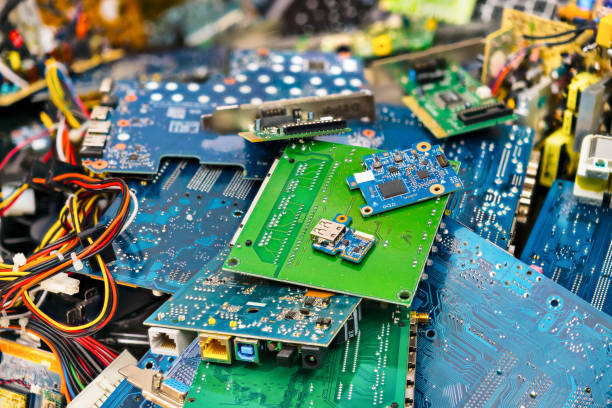
| Material Sourcing | Primary mining of rare earth elements, gold, copper, and quartz. | Reclamation of secondary commodities from retired printed circuit boards. | Substantial reduction in water consumption and habitat destruction. |
| Manufacturing | Energy-intensive silicon wafer fabrication and component assembly. | Harvesting and testing viable DRAM modules, processors, and controllers. | Avoidance of embodied carbon associated with new device production. |
| Product Deployment | Short service cycles followed by premature disposal. | Hardware lifecycle extension via cascading redeployment or modular upgrades. | Lower hardware replacement frequency and reduced procurement expenses. |
| End of Service | Landfill dumping, incineration, or uncontrolled scrap broker sales. | NIST-compliant sanitization, certified remarketing, and closed-loop material smelting. | Complete diversion from landfills; verifiable Scope 3 emissions mitigation. |
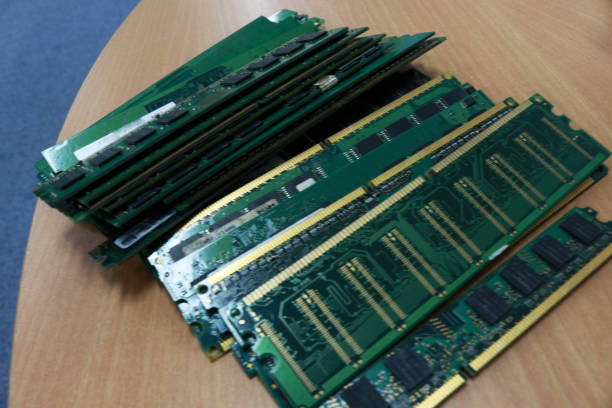
Component reuse represents the highest tier of circular sustainability. Remarketing or redeploying an existing memory module or server blade eliminates the need to produce a replacement from scratch. Official statistics from the U.S. Environmental Protection Agency highlight that commercial electronics recycling and reuse programs successfully divert millions of tons of selected consumer and commercial electronics away from municipal landfills each year, demonstrating that formalized collection frameworks deliver tangible environmental outcomes.
Evaluating Enterprise E-Waste Recycling Capabilities
Not all electronic scrap collectors possess the certifications and tracking infrastructure necessary to meet enterprise compliance standards. Sustainability teams should vet prospective partners against four mandatory operational criteria:
1. Recognized Industry Accreditations
Your partner must hold verified third-party environmental and security certifications, specifically R2v3 (Responsible Recycling) or e-Stewards, alongside ISO 14001 (Environmental Management) and ISO 9001 (Quality Management). These standards mandate strict downstream vendor tracking, forbidding illegal hazardous waste exportation.
2. High-Assurance Chain of Custody
Enterprise accountability demands serialized asset tracking from point of pickup to final disposition. Your provider must supply itemized bills of lading, tamper-evident pallet seals, and secure transport vehicles to protect against loss or tampering.
3. Integrated Data Destruction Protocols
Environmental responsibility cannot bypass corporate data security. Storage drives and flash memory modules must undergo verified data sanitization compliant with NIST SP 800-88 Rev. 1 or physical mechanical shredding. Each project must conclude with an itemized Certificate of Data Destruction containing matching drive serial numbers.
4. Transparent Material Mass-Balance Reporting
To substantiate ESG metrics, your partner must provide comprehensive mass-balance reporting detailing the exact weight of materials diverted from landfills, the percentage of hardware routed for secondary reuse, and the commodities returned to manufacturing streams.
How Enterprises Can Integrate Sustainable Recycling into Daily IT Operations
Transitioning from ad-hoc disposal to a mature sustainability initiative requires embedding asset retirement protocols directly into standard IT workflows:
- Incorporate ITAD Criteria into IT Procurement: Mandate that all technology refresh proposals include documented disposition plans, ensuring that legacy equipment is not left to depreciate in storage rooms.
- Establish Routine Collection Schedules: Move from unmanaged annual cleanouts to predictable quarterly collection cycles. Regular pickups capture higher resale value on decommissioned assets before secondary demand deteriorates.
- Standardize Component De-Manufacturing: Train technicians to separate high-value modular components such as server memory and CPUs cleanly before bulk chassis transport, preventing transit damage and maximizing the volume of hardware eligible for secondary reuse.
- Maintain Centralized ESG Audit Folders: Archive all Certificates of Recycling, Certificates of Data Destruction, and settlement reports within a centralized compliance repository accessible to internal sustainability auditors and executive leadership.
Advance Your Corporate Sustainability Goals with Ram Exchange
Fulfilling corporate ESG commitments while managing enterprise infrastructure requires an experienced, technically agile lifecycle partner. Since 2006, Ram Exchange has delivered dependable memory sourcing and comprehensive IT Asset Disposition (ITAD) solutions from Silicon Valley to corporate data centers, enterprises, and public institutions worldwide.
- Support for Corporate Circularity: We specialize in testing, re-certifying, and remarketing enterprise DRAM and server hardware, keeping functional components within the circular economy and minimizing industrial e-waste.
- Certified Lifecycle Security: Our specialized processing facilities provide certified data sanitization, serialized audit documentation, and environmentally sound material recycling in full compliance with e-waste guidelines.
- Comprehensive Technology Coverage: From legacy DDR3 server memory to cutting-edge DDR4 and DDR5 enterprise modules, we maintain the inventory required to keep your mission-critical infrastructure operating at peak efficiency.
- Monetize Surplus Assets Responsibly: When your organization is ready to retire older compute nodes, enterprise switches, or client workstation pools, you can sell to us to monetize surplus equipment, recover capital, and satisfy corporate sustainability mandates.
Lead the Transition Toward Sustainable Computing
Deploying verified e-waste recycling services allows corporate decision-makers to meet rigorous environmental standards while protecting sensitive company data and maximizing hardware capital recovery. By choosing partners that prioritize component reuse, insist on certified downstream recycling, and provide transparent compliance tracking, modern organizations can build resilient, sustainable computing environments that satisfy both shareholders and environmental auditors.
If your sustainability or IT operations team is planning an upcoming hardware refresh or seeks to establish a certified disposition pipeline for surplus enterprise equipment, contact our hardware lifecycle specialists at Ram Exchange today to receive an itemized proposal and logistical consultation.
Frequently Asked Questions
How do certified e-waste recycling services support Scope 3 emission reductions?
Certified recycling services extend the operational lifecycle of hardware components through remarketing and reuse, directly offsetting the need to manufacture new silicon. When hardware reaches true end-of-life, responsible commodity smelting recovers secondary metals, which requires significantly less energy and generates fewer greenhouse gas emissions than extracting virgin mineral ores.
What is the difference between R2 and e-Stewards certifications?
Both R2 (Responsible Recycling) and e-Stewards are leading third-party environmental standards for the electronics recycling industry. Both certifications require strict environmental compliance, safe working conditions, transparent downstream tracking, and data security. However, e-Stewards enforces slightly more restrictive policies regarding the transboundary movement of non-working electronic scrap to developing nations.
How does our organization verify that recycled equipment did not end up in a landfill?
A certified ITAD partner issues formal Certificates of Recycling alongside detailed mass-balance audit ledgers. These documents track incoming equipment by serial number and weight, certifying that all non-reusable materials were processed through zero-landfill downstream refining facilities in compliance with environmental regulations.
Can our business monetize retired hardware while still meeting sustainability targets?
Yes. Prioritizing component resale and refurbishment is the cornerstone of the circular economy. Remarketing working servers, processors, and high-density memory modules returns usable capital to your business to fund new IT initiatives while keeping functional electronics out of the recycling shredder.
What documentation is required to defend e-waste recycling during an ESG audit?
For an ESG audit, your organization should maintain an unbroken compliance packet consisting of serialized transportation manifests, Certificates of Data Destruction (NIST 800-88 compliant), Certificates of Recycling, and downstream mass-balance statements detailing the tonnage of materials diverted from landfills.